Covering the 5 weeks from 30 August to 3 October 2026
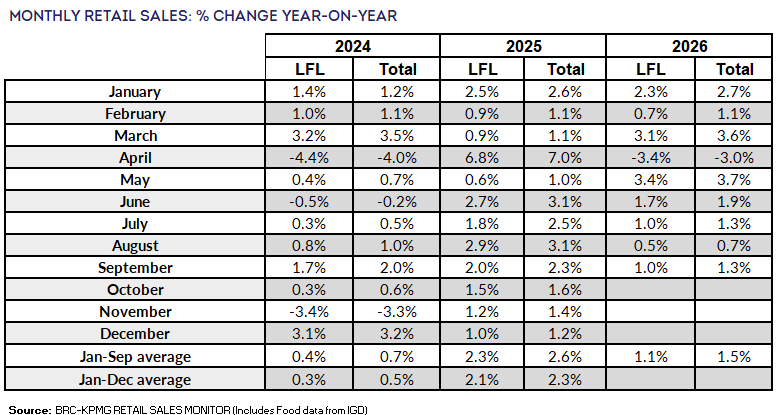
- UK Total retail sales increased by 1.3% year on year in
September, against a growth of 2.3% in September 2025. This was
below the 12-month average growth of 1.5%.
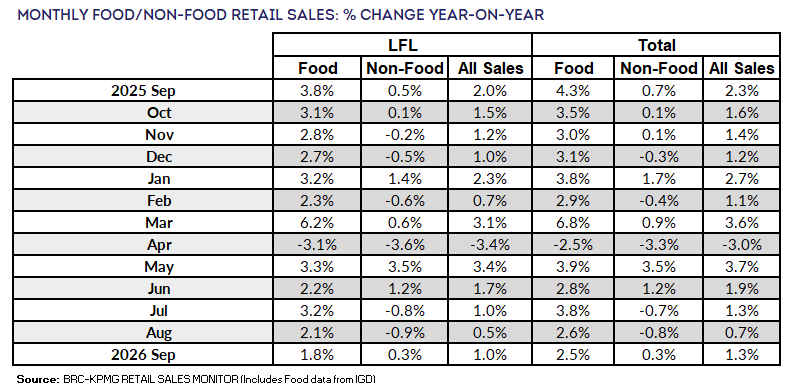
- Food sales increased by 2.5% year on year in September,
against a growth of 4.3% in September 2025. This was below the
12-month average growth of 3.1%.
- Non-Food sales increased by 0.3% year on year in September,
against a growth of 0.7% in September 2025. This was above the
12-month average growth of 0.2%.
- In-Store Non-Food sales increased by 0.1% year on year in
September, against a growth of 0.5% in September 2025. This was
above the 12-month average decline of 0.4%.
- Online Non-Food sales increased by 0.7% year on year in
September, against a growth of 1.0% in September 2025. This was
below the 12-month average growth of 1.3%.
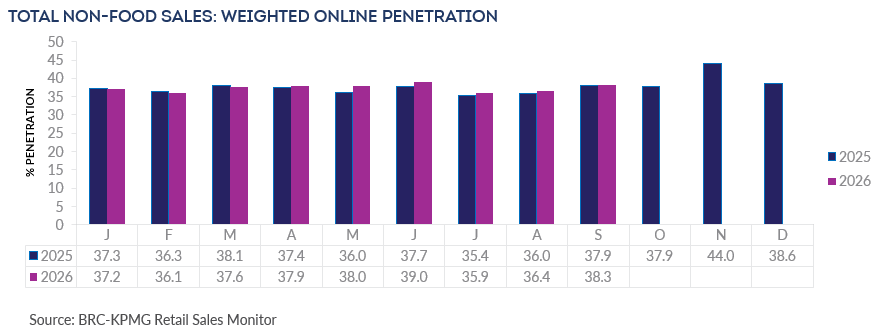
- The online penetration rate (the proportion of Non-Food items
bought online) increased to 38.3% in September from 37.9% in
September 2025. This was above the 12-month average of 38.1%.
Helen Dickinson, Chief Executive at the British Retail
Consortium, said:
Retail sales growth remained subdued in September as households
are still cautious with their spending ahead of expected rises in
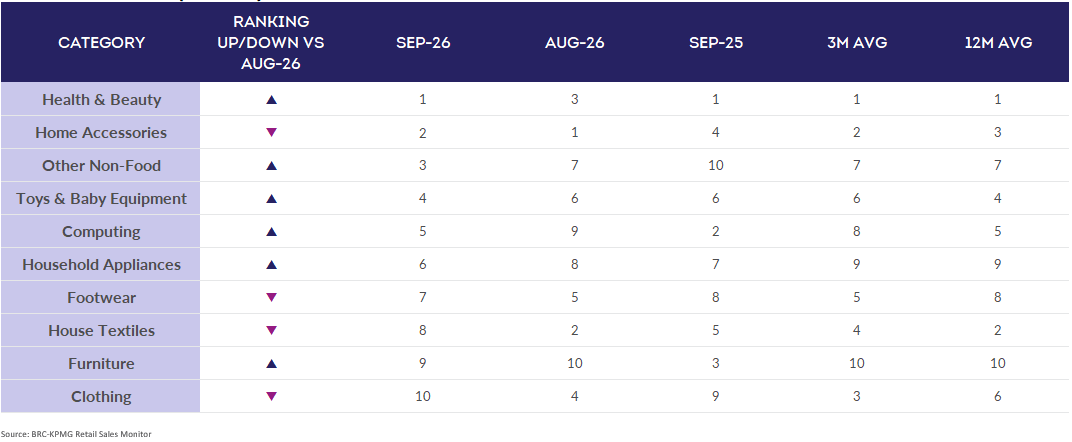
household bills and taxes. There were some bright spots, health
and beauty recorded its strongest month of the year so far as
consumers continued to prioritise small indulgences and refresh
their routines. Toys also performed well, helped by the launch of
Pokémon's 30th anniversary products. Clothing and footwear had a
weak month as unseasonally warm weather weakened demand, but
back-to-school spending saw a boost.
The Chancellor cannot promise to ease the cost of living while
piling more costs onto the retailers working to keep prices down.
With confidence fragile, this Budget is a critical test.
Retailers will do everything they can to protect value for
customers, but Government must play its part. Another rise in
business rates would push up pressure on prices, choke off
high-street investment and put local jobs at risk. This Budget
must back retail to invest, employ and grow not make it harder.
Linda Ellett, UK Head of Consumer, Retail & Leisure,
KPMG, said:
"September's retail sales figures point to an increasingly
selective consumer. Overall sales increased, driven by
food, but non-food sales were essentially flat and have declined
slightly across the last three months. This is a battle for
share of wallet, with shoppers prioritising some categories while
postponing purchases elsewhere. Fashion faced a
particularly difficult September and while the prolonged summer
has supported clothing and footwear, it may have delayed the move
into autumn and winter wardrobes.
With the Black Friday promotional period approaching, some
consumers will inevitably be questioning whether today's purchase
might be cheaper tomorrow. That creates an important test
for retailers as the Golden Quarter begins. If some of
September's weakness represents deferred rather than lost demand,
there remains an opportunity to unlock spending, but retailers
will need to balance customers' increasing appetite for value
against the need to protect margins."
Sarah Bradbury, CEO, IGD, said:
September saw shoppers return to familiar routines as the summer
holidays came to an end but despite the greater stability,
shopper confidence dipped against a backdrop of surging prices at
fuel pumps and planned rises in energy prices. Speculation around
tax rises in the Budget will also be weighing on shoppers' minds,
with these factors adding pressure to household finances and
translating into weaker spending. While Halloween may support
impulse grocery sales in the short term, food businesses'
attention will be firmly on the Budget and what it could mean for
consumer spending power, business costs and demand heading into
2027.
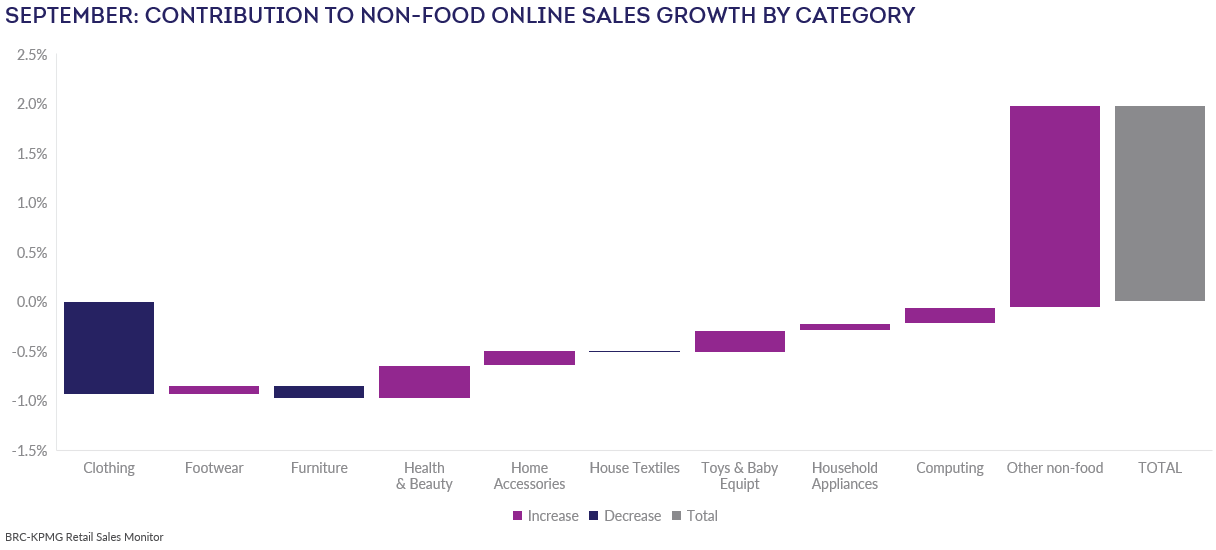
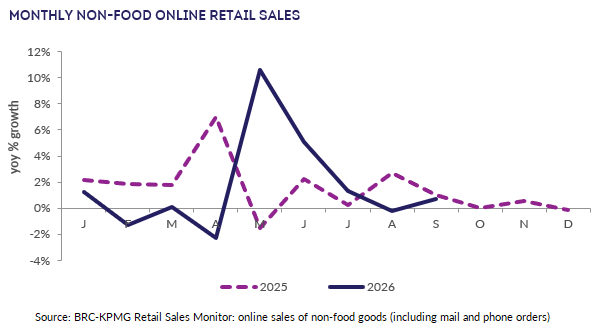
Online sales category growth rankings