Covering the 4 weeks of 1 – 28 February 2026
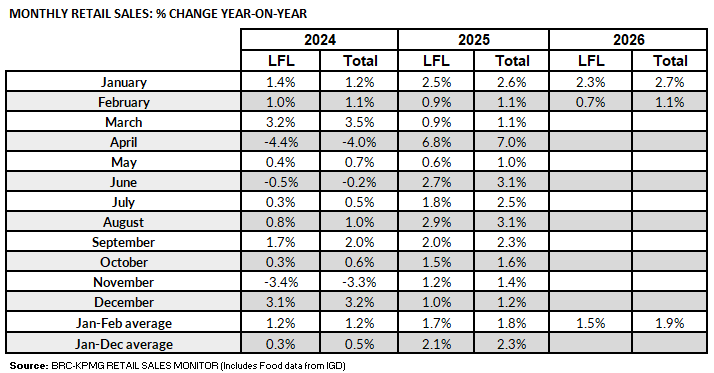
- UK Total retail sales increased by 1.1% year on year in
February, against a growth of 1.1% in February 2025. This was
below the 12-month average growth of 2.3%.
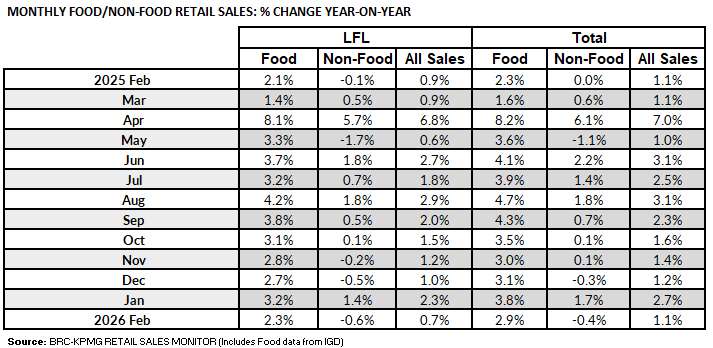
- Food sales increased by 2.9% year on year in February,
against a growth of 2.3% in February 2025. This was below the
12-month average growth of 3.8%.
- Non-Food sales decreased by 0.4% year on year in February,
against 0.0% in February 2025. This was below the 12-month
average growth of 1.0%.
- In-Store Non-Food sales increased by 0.2% year on year in
February, against a decline of 1.0% in February 2025. This was
below the 12-month average growth of 1.0%.
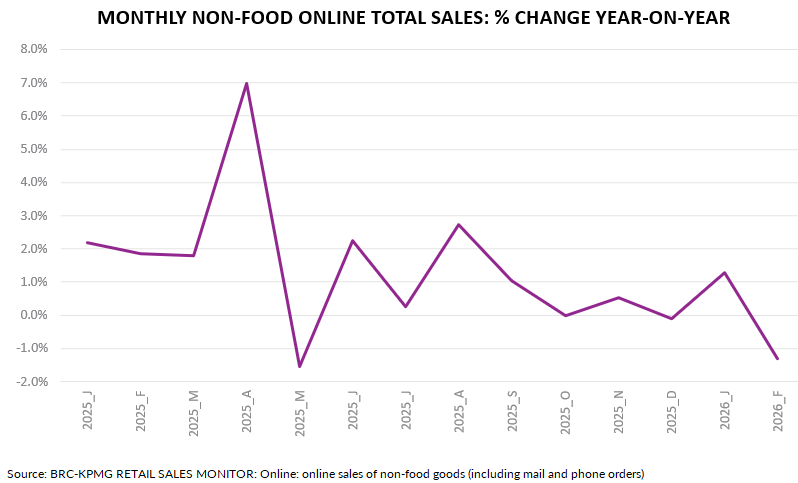
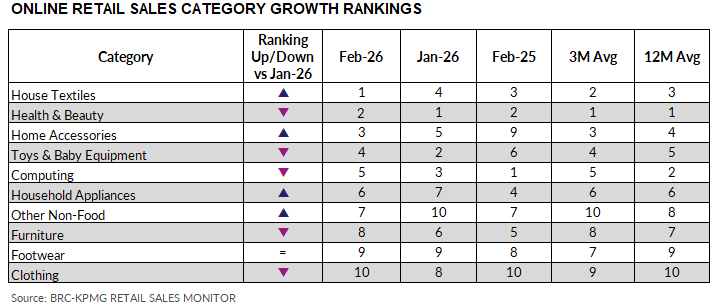
- Online Non-Food sales decreased by 1.3% year on year in
February, against a growth of 1.9% in February 2025. This was
below the 12-month average growth of 1.2%.
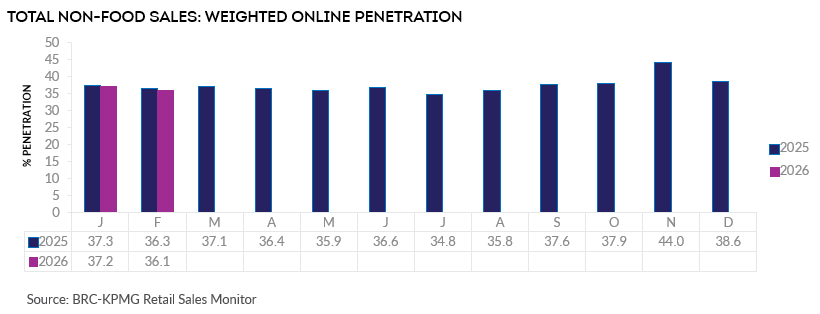
- The online penetration rate (the proportion of Non-Food items
bought online) decreased to 36.1% in February from 36.3% in
February 2025. This was below the 12-month average of 37.3%.
Helen Dickinson, Chief Executive at the British Retail
Consortium, said:
"February's grey, wet weather hit retail sales hard. Spending was
weak across most categories, online and instore, as households
pulled back after Christmas and January's rebound. Food sales
were flat in real terms as shoppers tightened their belts.
Valentine's Day did provide a bright spot, with jewellery,
watches and perfume performing better as people still treated
loved ones.
"While retailers look to Spring and better weather to lift
spirits and revive sales, conflict in the Middle East threatens
knocking any recovery off course. Prolonged low consumer
confidence adds strain on retailers already facing mounting cost
pressures, higher taxes and a growing regulatory burden. At such
a time, government's top priority should be to avoid piling on
further cost and complexity and to think carefully about the real
world impacts of aspects of the Employment Rights Act. Without
realism and restraint, retailers will struggle to invest in the
jobs the economy needs and prices households can afford."
Linda Ellett, UK Head of Consumer, Retail & Leisure,
KPMG, said:
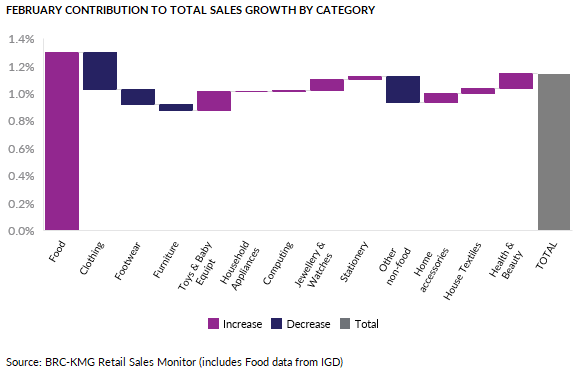
“Health and wellbeing related purchases helped to drive modest
monthly retail sales growth in February. But minus food and drink
sales, the momentum wasn't strong enough to keep growth going for
total non-food goods.
“While some channels, categories, and brands are showing there is
still room to thrive, the combination of ongoing business costs
and limited consumer spending is challenging others – with
efficiency drives and technological transformation continuing at
pace.”
Food & Drink sector performance | Sarah Bradbury,
CEO, IGD, said:
“February delivered one of the wettest months on record, yet
shopper sentiment still saw a modest lift thanks to easing
inflation and news of a forthcoming 7% cut in energy prices,
offering a rare sense of financial reprieve. Seasonal spikes
around Valentine's Day and Pancake Day boosted at home dining but
failed to translate into volume growth. As March begins, the
outlook is deteriorating. The OBR's latest forecast downgraded
near term growth, whilst the conflict in the Middle East is
strengthening concerns over fuel costs, which could impact food
price inflation, if the situation continues. Together, these
risks suggest February's uptick in sentiment may prove short
lived.”