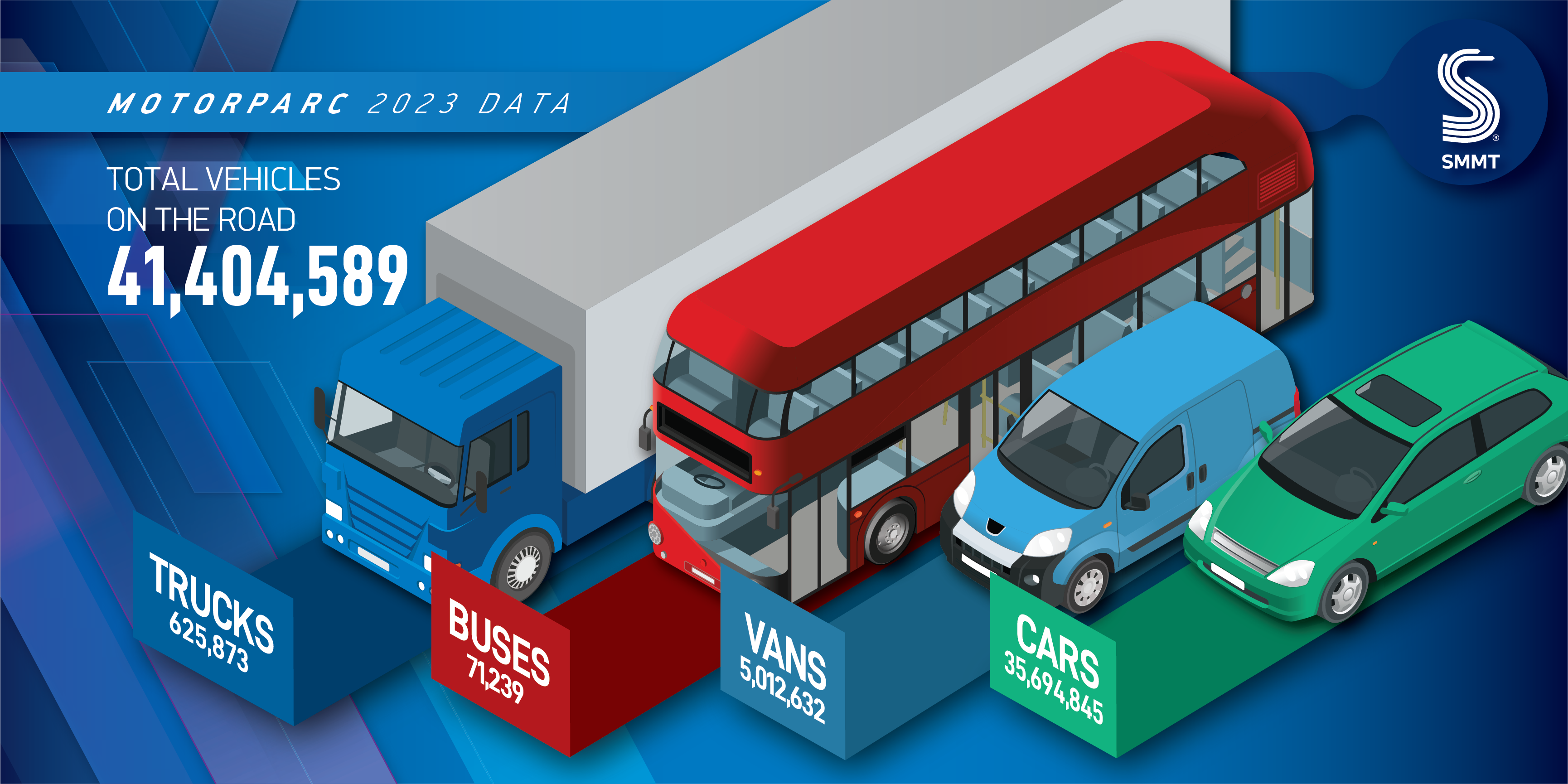
The number of vehicles on UK roads reached a record high in 2023,
rising by 1.7% to 41,404,589 vehicles, according to new Motorparc
data published today by the Society of Motor Manufacturers and
Traders (SMMT) – with plug-in vehicles driving the biggest growth
in car ownership since 2016.1 Total cars on the road rose by 1.6%
or 546,800 units to 35,694,845, after almost half a million new
battery electric (BEV) and plug-in hybrid (PHEV) vehicles were
registered during...Request free trial
The number of vehicles on UK roads reached a record high in 2023,
rising by 1.7% to 41,404,589 vehicles, according to new Motorparc
data published today by the Society of Motor Manufacturers and
Traders (SMMT) – with plug-in vehicles driving the biggest growth
in car ownership since 2016.1
Total cars on the road rose by 1.6% or 546,800 units to
35,694,845, after almost half a million new battery electric
(BEV) and plug-in hybrid (PHEV) vehicles were registered during
2023.2 The number of BEVs in use increased by
almost half (47.3%) compared with 2022, meaning these
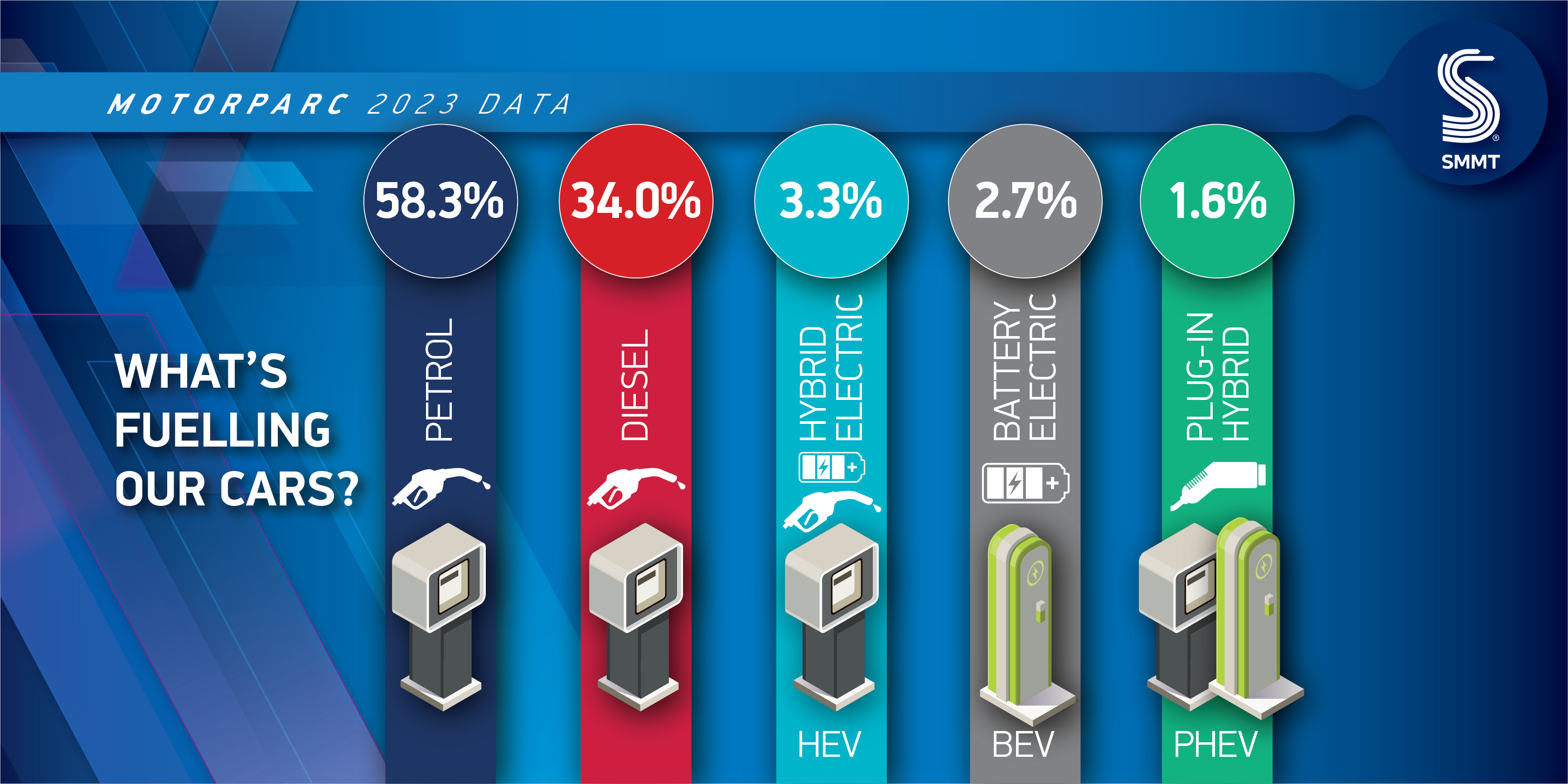
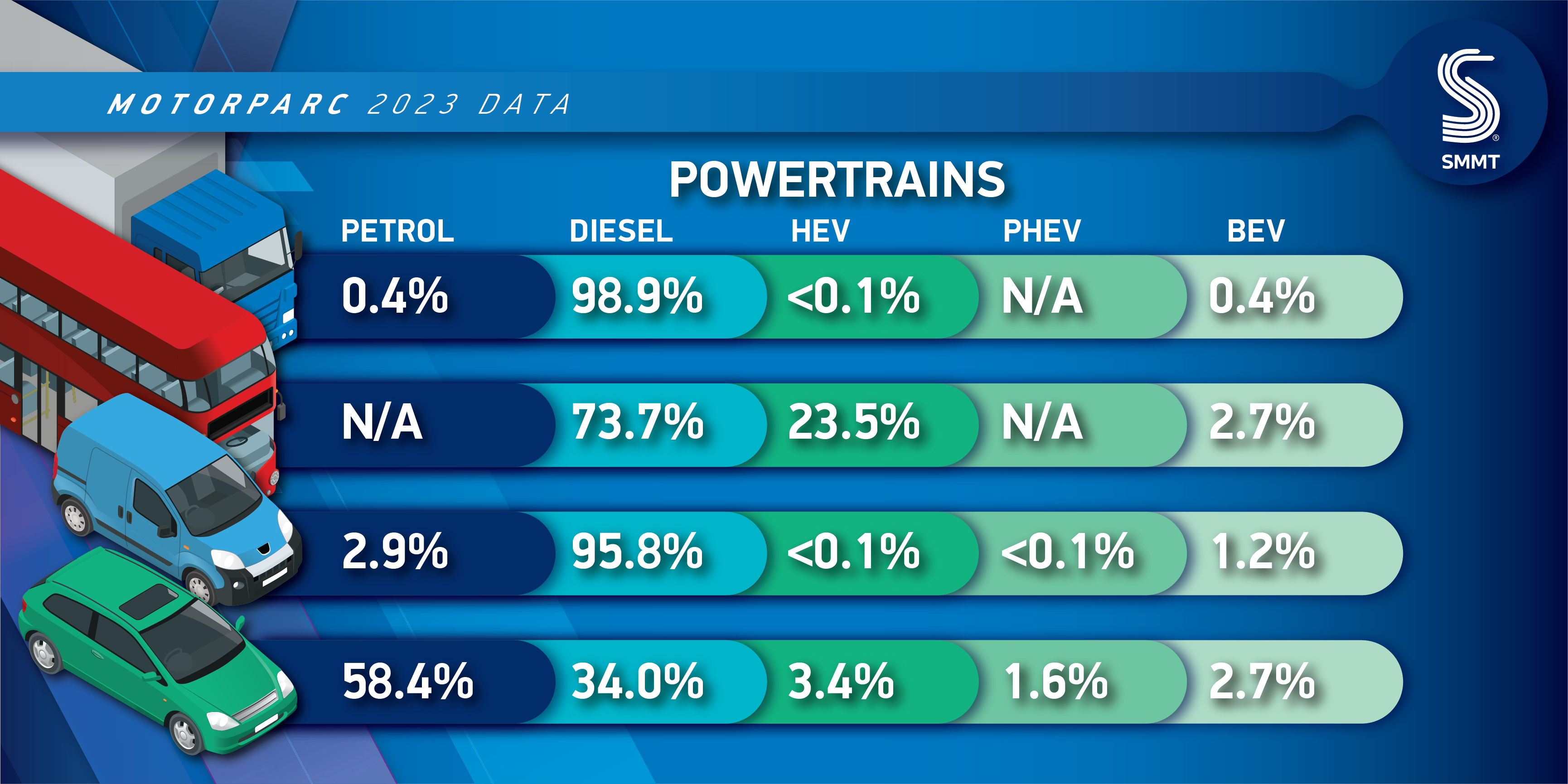
vital zero emission vehicles now account for 2.7% of all cars in
use, up from just 1.9% in 2022.
With the industry now largely recovered from previous supply
chain challenges that constricted deliveries in the aftermath of
the pandemic, manufacturers could better meet robust pent-up
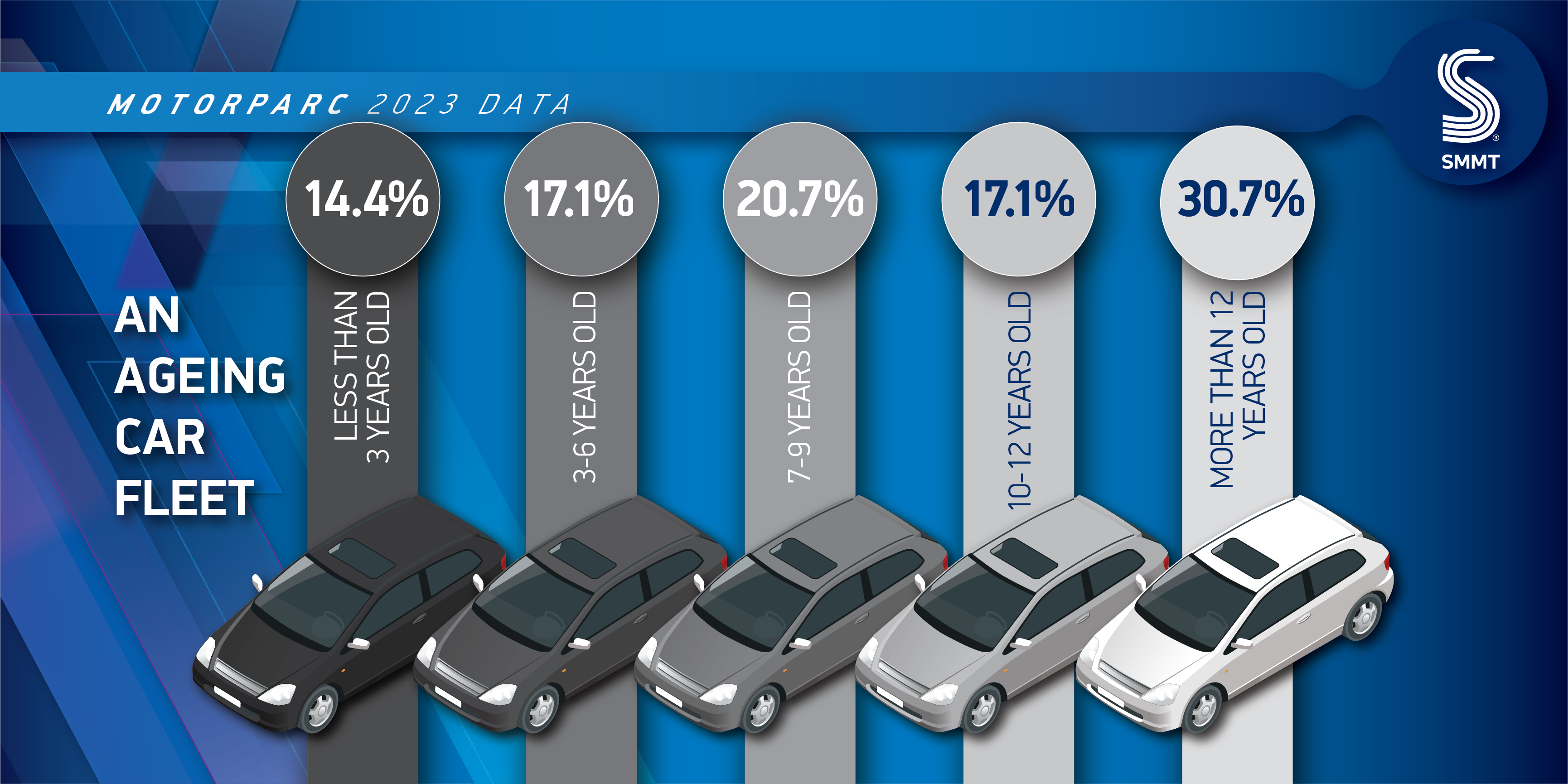
demand. Implied scrappage rates of older vehicles has also fallen
to the lowest on record with British motorists keeping their cars
for longer, with the average car on the road now nine years old –
with the average age of xfa car now up by more than a year since
2019.3
Despite a record number of motors on the road, average car
CO2 dropped -2.1% – while company car emissions
plummeted by -11.5%, thanks to compelling fiscal incentives
encouraging fleets to invest in EVs and manufacturer investment
in new lower and zero emission models.4 Providing
private consumers with similar incentives to switch
would help dramatically decarbonise UK road transport.
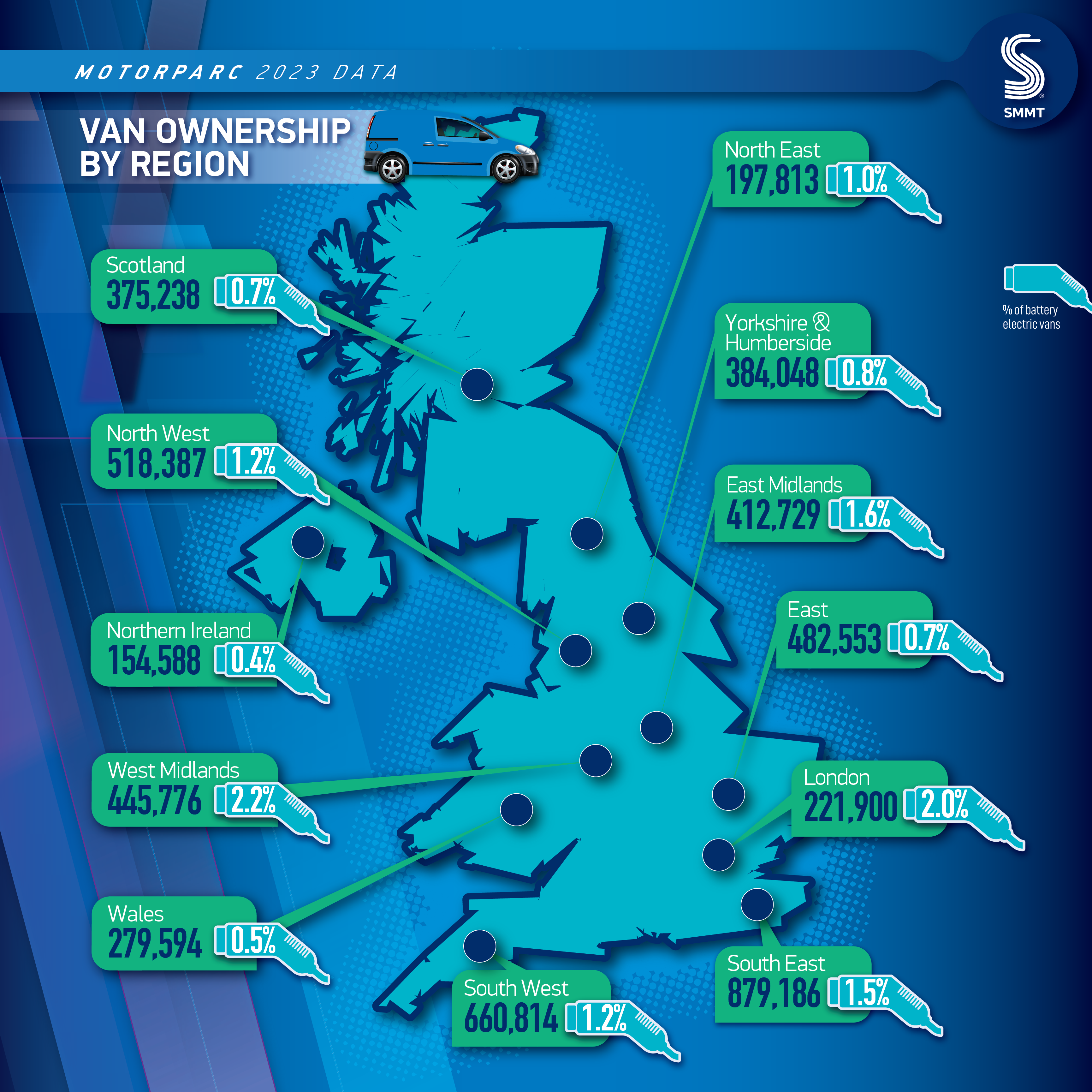
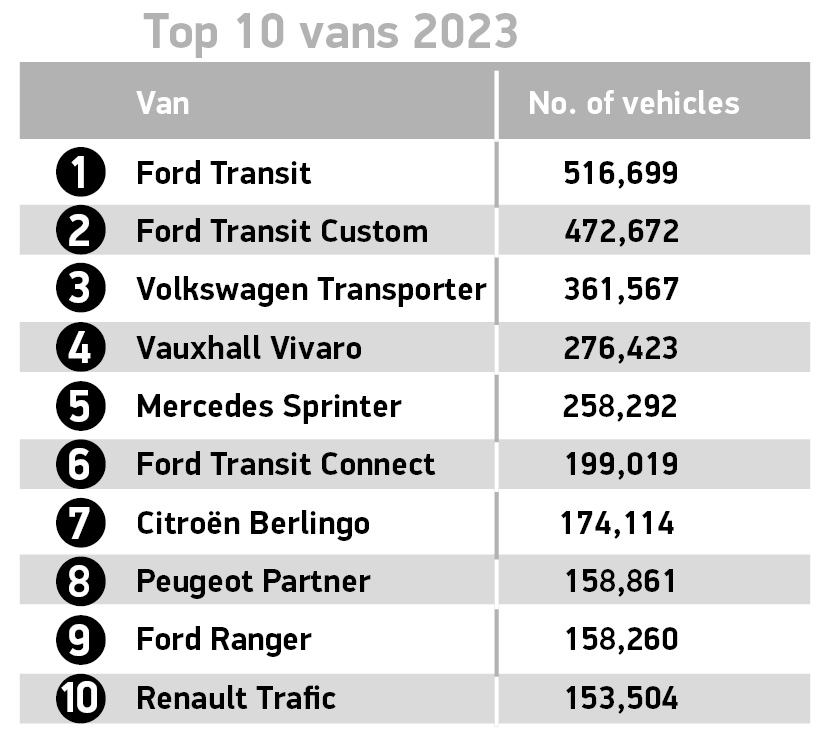
Record numbers of commercial vehicles are now in use, with
625,873 heavy goods vehicles and 5,012,632 vans in operation, up
by 1.7% and 2.6% respectively. Zero emission workhorses also
recorded a boost – with BEV van volumes rising by 43.5% on 2022
to 61,161, meaning 1.2% of vans on UK roads is now zero
emission. Electric HGVs rose 146.4% in 2023, although at just
0.4% of the fleet, urgent action is therefore required on grants
and infrastructure – especially given that new trucks under 26
tonnes have the same end of sale date as cars and vans.
The number of electric buses in operation also grew, up by 159.4%
to 1,922 units, making the UK Europe's biggest market for zero
emission buses and coaches. However, despite a record year of
registrations in 2023, the UK's public transport fleet has shrunk
to its smallest level since records began at 71,239 vehicles. In
further evidence of the need for greater investment in this
sector, one in five buses in use is more than 18 years old.
While overall EV use continues to grow, with 1,602,334 plug-in
cars, vans, trucks and buses in operation, public chargepoint
rollout is still lagging. 2023 was the best year for public
chargepoint rollout, but there is still just one standard public
charger available for every 35 plug-in cars on the road, only a
slight improvement from one for every 36 last
year.5 The situation is even more challenging for
commercial vehicles, with no clear national plan for van-specific
chargepoints, and just one dedicated public truck charging
location for the entire country. With increasing numbers of
electric cars and vans now being mandated for sale, the time to
invest in infrastructure is now. That investment should be
nationwide so that everyone – irrespective of vehicle type,
location and accessibility – can access a reliable, convenient
and affordable charging network.
Mike Hawes, SMMT Chief
Executive, said, "After two challenging years
of constrained supply, more people and businesses across the UK
are now getting back behind the wheel – and increasingly, opting
for greener options. However, given the ageing fleet, we now
need to encourage consumers and businesses who have deferred
purchases of new cars, vans, trucks and buses to upgrade. A
stronger and stable economy, coupled with reduced living costs,
would boost consumer and business confidence, while compelling
fiscal incentives would ensure that these purchases are emissions
free. Not only would this accelerate the transition – fundamental
to the UK's net zero ambitions – but it would also stimulate the
economy and enhance the wider environment in which we all live."
Did you know?
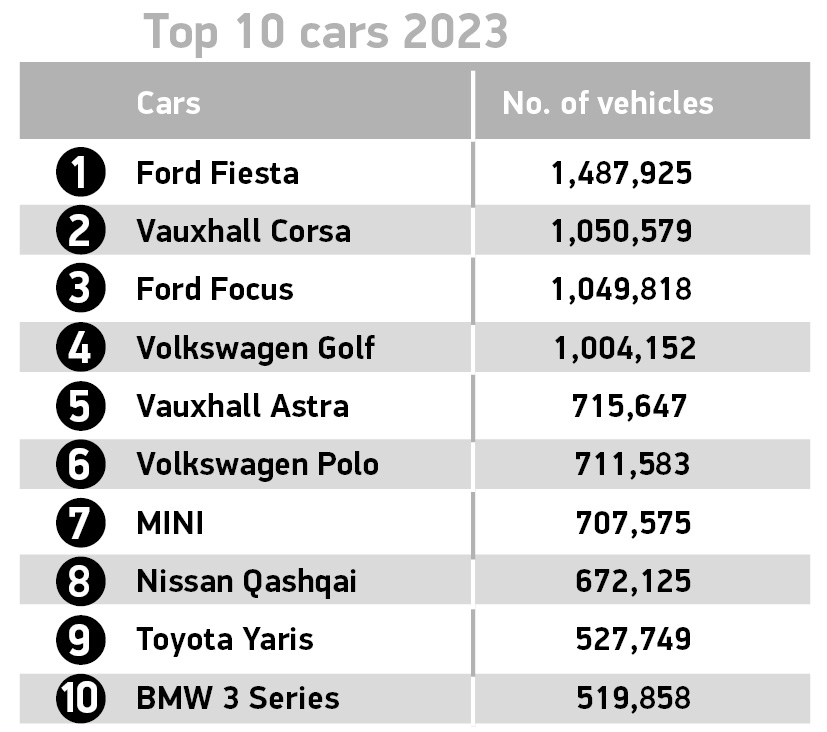
- The five most popular cars on UK roads in 2023 accounted for
over 5.3 million in use – these are the Ford Fiesta at 1,487,925,
Vauxhall Corsa at 1,050,579, Ford Focus at 1,049,818, Volkswagen
Golf at 1,004,152 and Vauxhall Astra with 715,647 in use.
- 35.1% of cars on the road are registered to women, compared
with 51.1% to men – with the remainder either registered to
companies or gender unlisted. This follows a rise of more than
half a million women as registered keepers on 20186
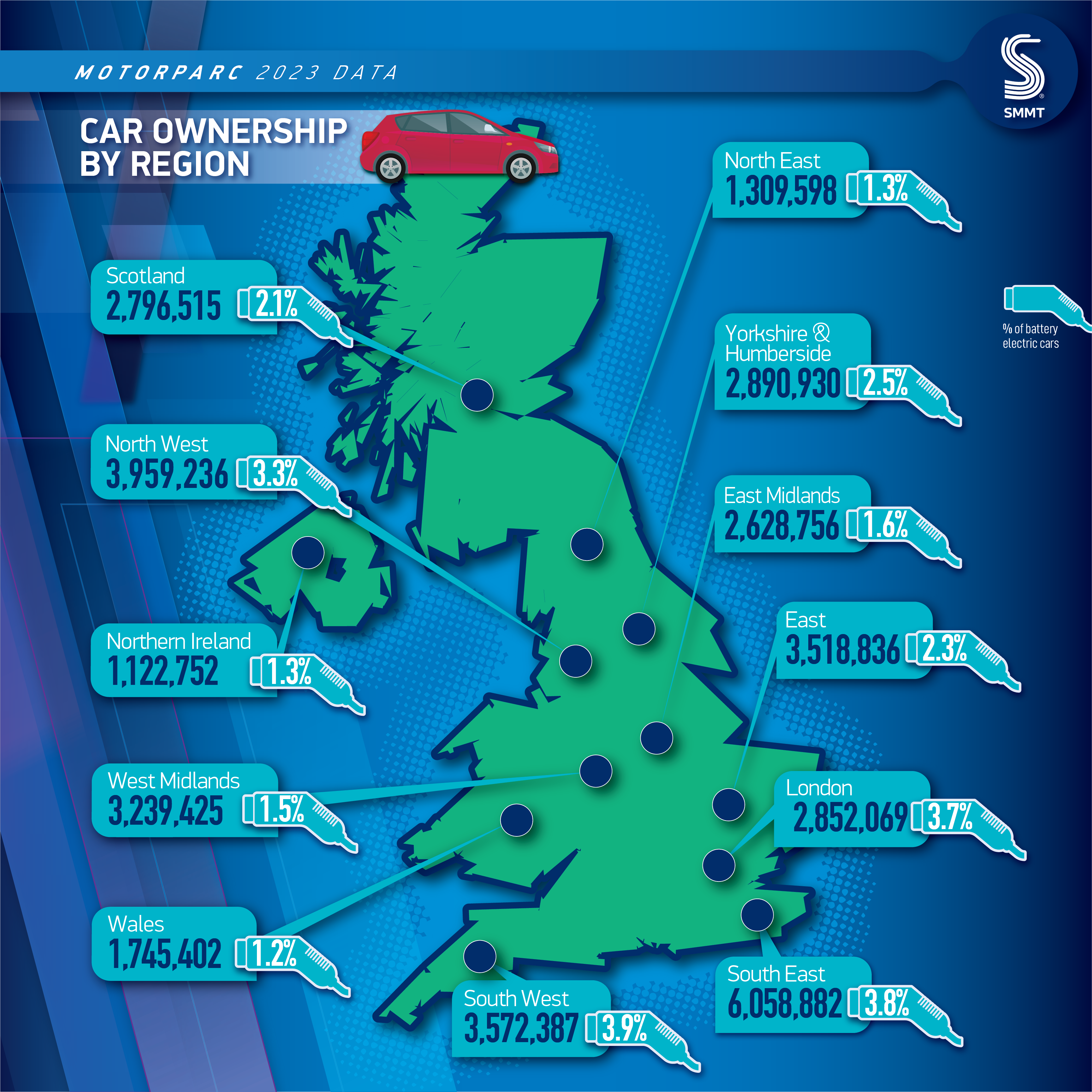
- The highest number of cars in the UK reside in London and the
South East (8,910,951), followed by the North West
(3,959,236) and the South West (3,572,387)
- With electric vehicles increasing in popularity, manual
transmissions have fallen to 63.5% of the parc, down from 66.0%
in 2022.
- London and the South East is also the region with the highest
volume of plug-in vehicles with over half a million (527,887) of
these green vehicles making up 5.9% of all cars in the area
- The UK might be the fifth rainiest country in Europe... yet
that hasn't stopped convertibles accounting for almost one in 35
cars on the road, with 1,022,849 in use – falling very slightly
on 2022 by 0.1 percentage points7
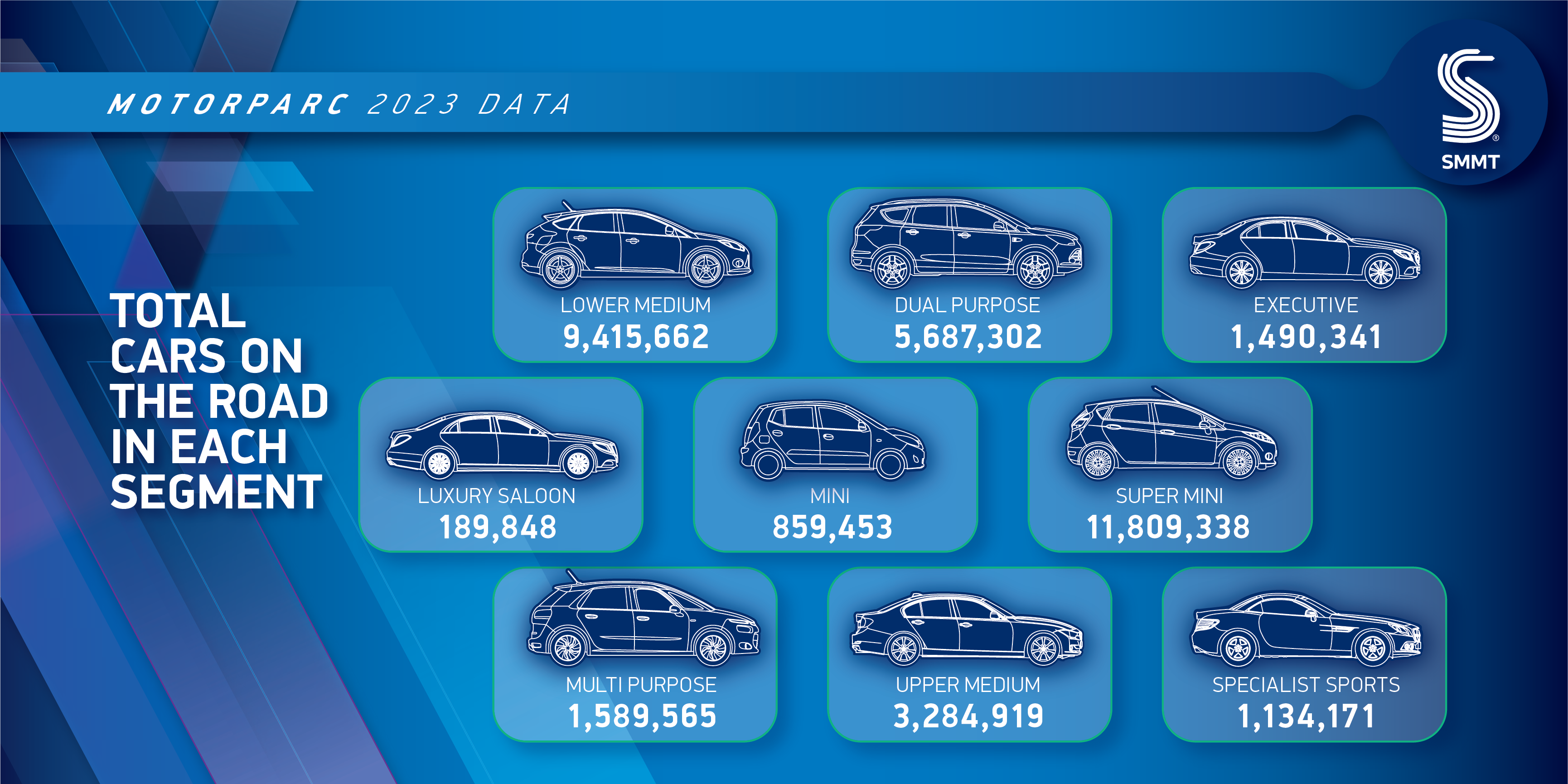
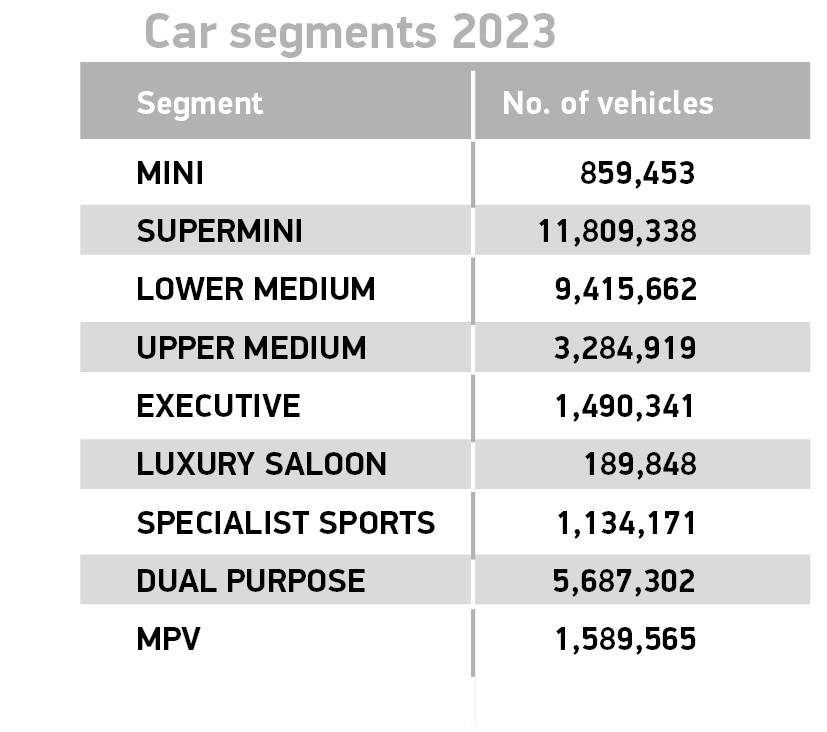
- Continuing their domination, superminis remain the most
popular car type on roads, with one in three drivers choosing
these more compact vehicles to get around
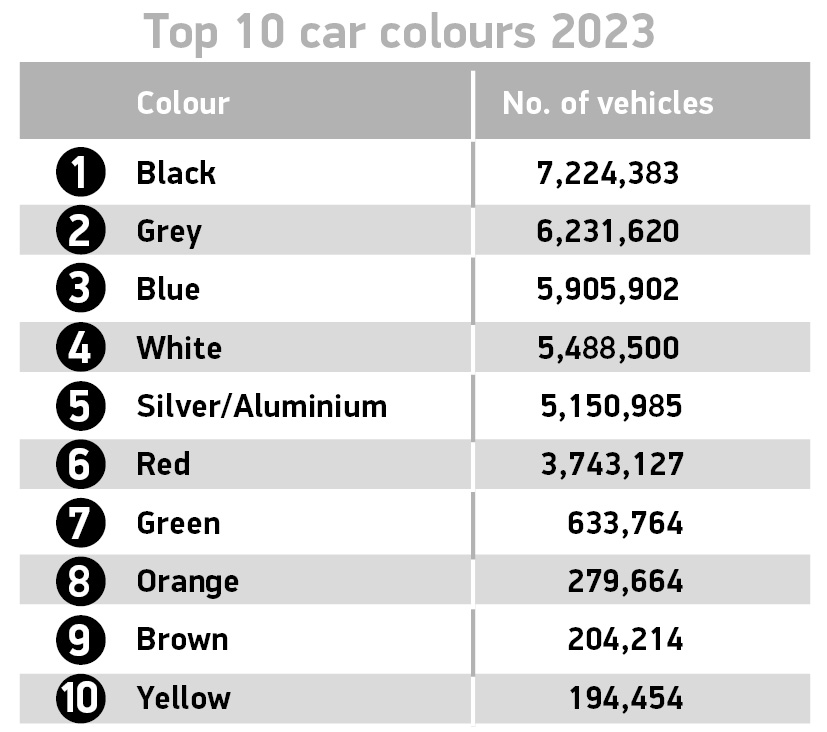
- You're more likely to see a car or van painted white than in
any other colour in the UK, with 8,187,012 of them on the roads.
Black and grey come in second and third place at 7,609,015 and
6,792,003 units respectively
- Almost 25,000 pink cars can be found on British roads – with
four in five registered to women. Wales has the highest
proportion of pink cars, accounting for 0.1% of those in use.
Scotland has the highest proportion of red cars at 12.3%
- 2023 may have had a record year of vehicle registrations, but
the UK's public transport actually recorded the smallest bus
fleet level since records began at 71,239 vehicles, down
from 72,766 in 2022 and over 100,000 in 2007.
|
|
|
|
|
|
|
|
|
|
|
|
|
|
|
|
|
|
|
|
|
|
|
|
|
|
|
|
|
|
|
|
|
|
|
|
|
|
|
|
|
|
|
|
|
|
|
|
|
|
|
|
|
|
|
|
|
|
|
|
|
|
|
|
|
|
|
|
|
|
|
|
|
|
|
|
|
|
|
|
|
|
|
|
|
|
|
|
|
|
|
|
|
|
|
|
|
|
|
|
|
|
|
|
|
|
|
|
|
|
|
|
|
|
|
|
|
|
|
|
|
|
|
|
|
|
|
|
|
|
|
|
|
|
|
|
|
|
|
|
|
|
|
|
|
|
|
|
|
|
Notes to editors
1 Motorparc 2016 growth: 2.5%
2 2023 new car registrations: 314,687 BEVs and 141,311
PHEVs
3 Scrappage levels based on data from 2023 to 2000
4 Total CO2 emissions, 2023: 132.1 g/km; Total CO2
emissions, 2022: 135.0 g/km; Mean CO2 emission figures
for company cars, 2023: 103.3 g/km; Mean CO2 emission
figures for company cars, 2022: 116.7 g/km
5 DfT Electric vehicle charging device statistics, Jan
2024: 43,559 slow/fast chargers
6 Female registered keeper volume growth, 2018 versus
2023: 523,531
7 Based on World Bank data
|
|
