Sales figures are not adjusted for inflation. Given that both the
November SPI (BRC) and October CPI (ONS) show inflation running
at higher than normal levels, the rise in sales masked a likely
drop in volumes once inflation is accounted for. Like-for-like
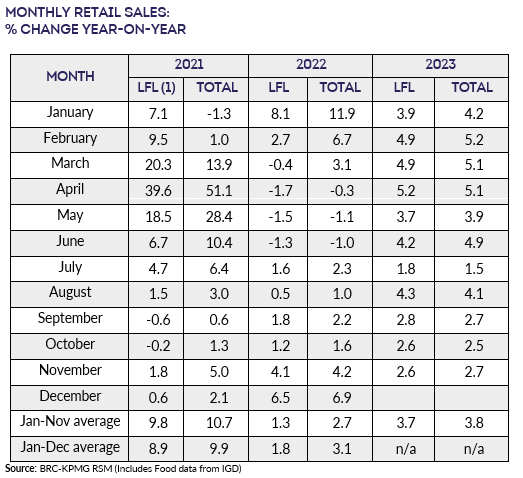
data has been moved from the bullets to the tables at the bottom.
Covering the four weeks 29 October – 25 November
2023
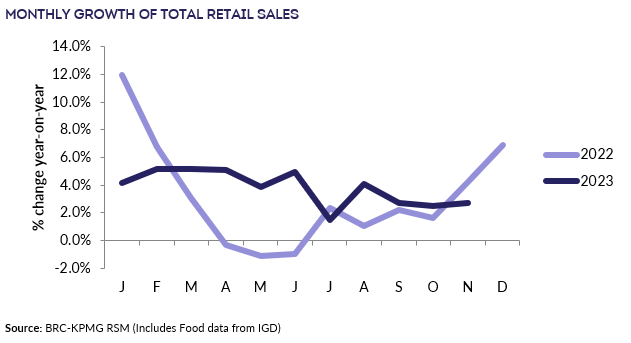
UK Total retail sales increased
2.7% in November, against a growth of 4.2% in November 2022. This
was above the 3-month average growth of 2.6% and below the
12-month average growth of 4.1%.
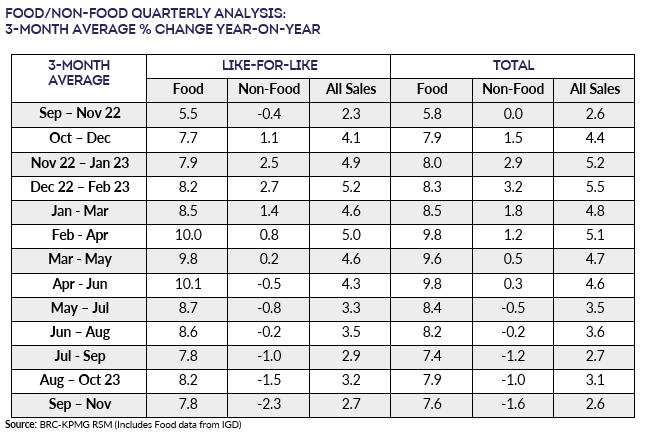
Food sales increased 7.6% on a Total basis over
the three months to November. This is below the 12-month average
growth of 8.4%. For the month of November, Food was in growth
year-on-year.
Non-Food sales decreased 1.6% on a Total basis
over the three-months to November. This is below the 12-month
average growth of 0.5%. For the month of November, Non-Food was
in decline year-on-year.
Over the three months to November, In-store Non-Food
sales decreased 0.8% on a Total basis since November
2022. This is below the 12-month average growth of 0.6%.
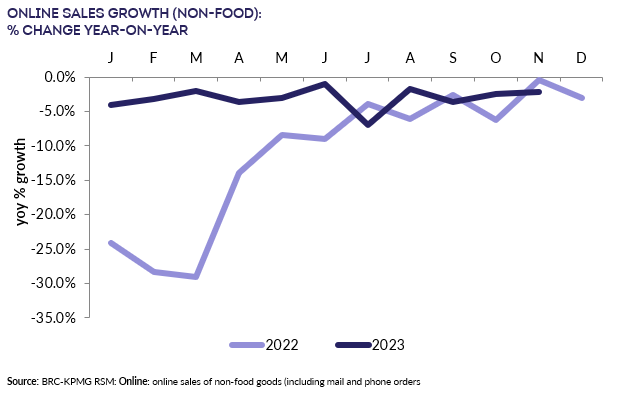
Online Non-Food sales decreased by 2.1% in
November, against a decline of 0.4% in November 2022. This was
shallower than the 3-month decline of 2.8% and deeper than the
12-month decline of 3.0%.
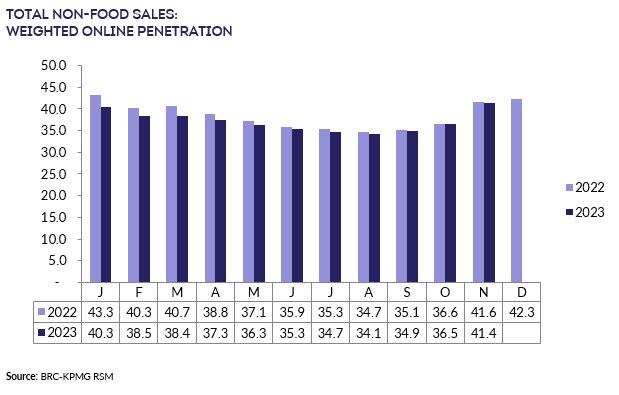
The proportion of Non-Food items bought online (penetration rate)
decreased to 41.4% in November from 41.6% in November 2022.
Helen Dickinson OBE, Chief Executive
of the British Retail Consortium, said:
“Black Friday began earlier this year as many retailers tried to
give sales a much-needed boost in November. While this had the
desired effect initially, the momentum failed to hold throughout
the month, as many households held back on Christmas spending.
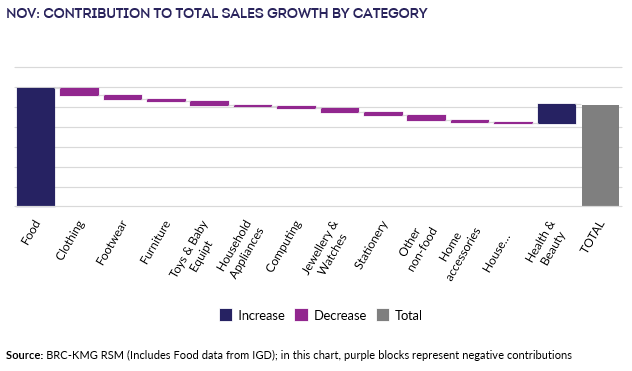
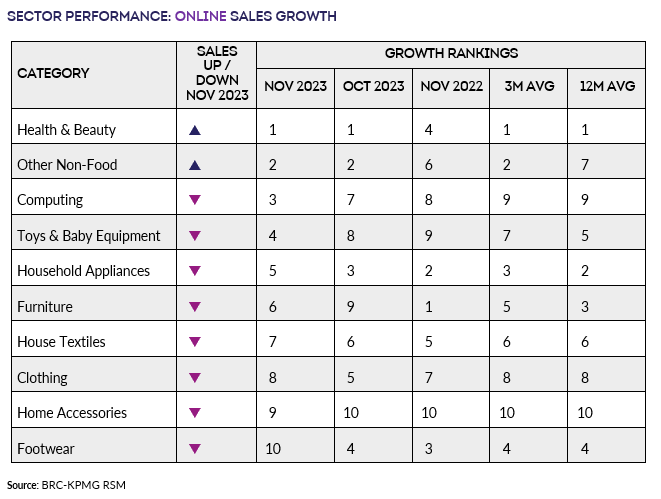
Health and beauty products showed stronger growth, but non-food
sales were down overall year on year. November had the highest
proportion of non-food goods purchased online for 2023, though
this remains below the previous years’ level.
“Retailers are banking on a last-minute flurry of festive
frivolity in December and will continue working hard to deliver
an affordable Christmas for customers so everyone can enjoy some
Christmas cheer. Looking ahead to 2024, retailers will have to
shoulder many new cost pressures, including a rise to business
rates, as well as costs from other new regulations. These
combined with the biggest rise on record to the National Living
Wage will mean retailers will have less capital to invest in
lowering prices for their customers.”
, UK Head of Retail, KPMG,
said:
“With the clock ticking down to Christmas, sales growth in
November remained weak at 2.7%, despite a big push from retailers
around Black Friday deals.
“Food and drink, health, personal care and beauty categories
continued to drive growth whilst jewellery and watches saw the
biggest decline in sales on the high street, suggesting consumers
are abandoning expensive presents in favour of more budget
friendly gifting. Online sales fell yet again, but
penetration rates rose by 5% on October to 41.5% as consumers
shopped around for Black Friday bargains.
“With less than a month to go and sales growth limping along, the
cost-of-living crisis has taken its toll on Christmas spending
for many households, and the continued economic conditions are
testing consumer resilience. Price remains the main
purchasing driver, so we are likely to see a prolonged and well
targeted period of discounting as retailers compete hard for a
shrinking pool of spend and will need to clear stock.
“With two of the three months of the crucial golden quarter
seeing sales growth below 3%, it has already been a weak
Christmas trading period. Any excess stock not sold before
Christmas could be further reduced leading to big January sales,
and potentially having an even greater impact on already tight
margins. As we look to the first few months of 2024, we can
expect the challenges to continue which could lead to further
casualties in the sector, particularly pure online players facing
more than 28 months of consecutive sales decline.”
Food & Drink sector performance | Sarah Bradbury,
CEO, IGD, said:
“For a second month in a row, food and drink sales were down in
November compared to October. The comparatives to November ’22
paint a slightly better picture with an increase in sales,
although this was offset by a marginal decline in volume.
Footfall for the month was down compared to November ’22, a
likely result of storms Ciarán and Debi bringing wetter and more
windy weather across the country.
“IGD’s Shopper Confidence Index enjoyed a slight rise in
November, driven primarily by a rise in confidence among the
lowest income earners. This group were likely boosted by plans
for the national minimum wage to rise announced by the government
in the Autumn Statement. Although lower income earners still
expect to be ‘about the same’ financially next year, rather than
actively better off. Trust in the industry rose again, with 30%
now trusting the food and consumer goods industry to keep prices
low, compared to 24% in October ’23. This is likely to continue
further if general sentiment continues to improve.”