BRC-KPMG RETAIL SALES MONITOR – OCTOBER 2023
Sales figures are not adjusted for inflation. Given that both the
October SPI (BRC) and September CPI (ONS) show inflation running
at higher than normal levels, the rise in sales masked a likely
drop in volumes once inflation is accounted for. Like-for-like
data has been moved from the bullets to the tables at the bottom.
Covering the four weeks 1 – 28 October
2023
-
UK Total
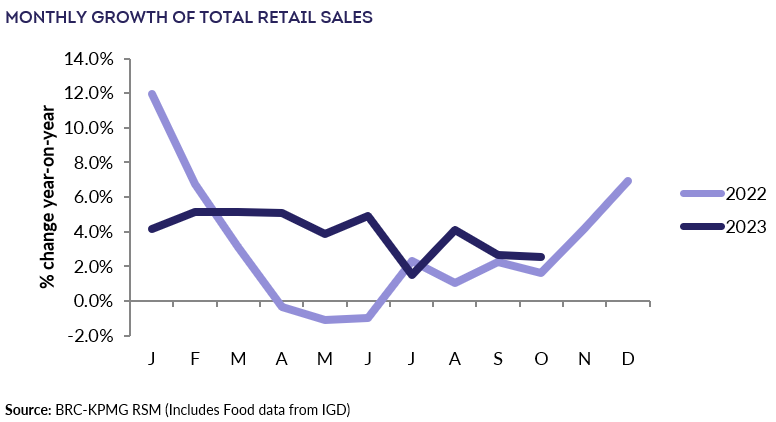
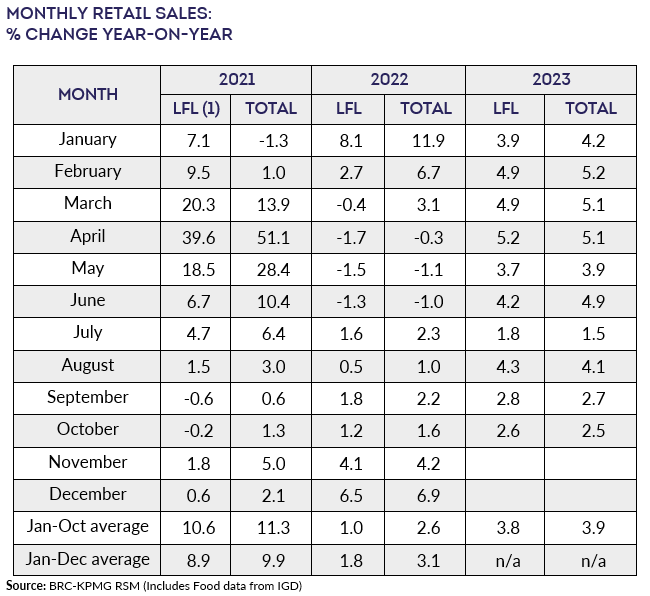
retail sales increased by
2.5% in October, against a growth of 1.6% in October 2022. This
was below the 3-month average growth of 3.1% and the 12-month
average growth of 4.2%.
-
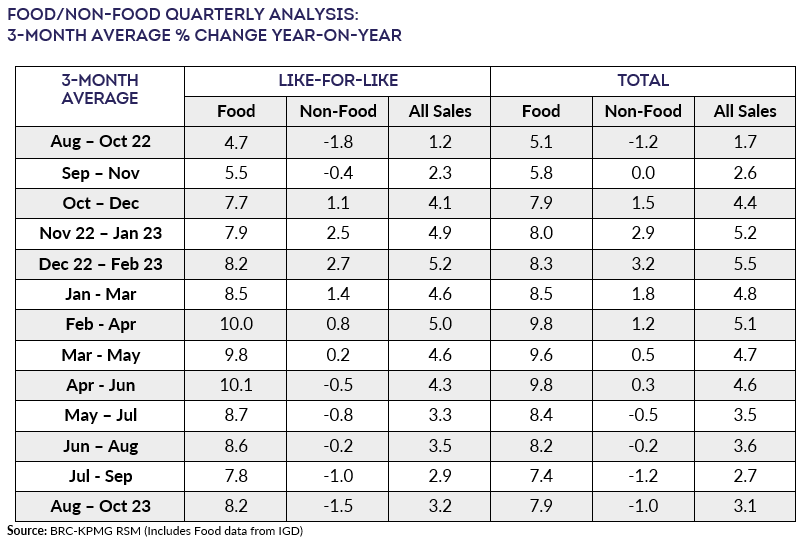
Food sales increased 7.9% on a Total
basis over the three months to October. This is below the
12-month average growth of 8.5%. For the month of October, Food
was in growth year-on-year.
-
Non-Food sales decreased 1.0% on a Total
basis over the three-months to October. This is below the
12-month average growth of 0.6%. For the month of October,
Non-Food was in decline year-on-year.
- Over the three months to October, In-store
Non-Food sales decreased 0.1% on a Total basis
since October 2022. This is below the 12-month average growth of
3.0%.
-
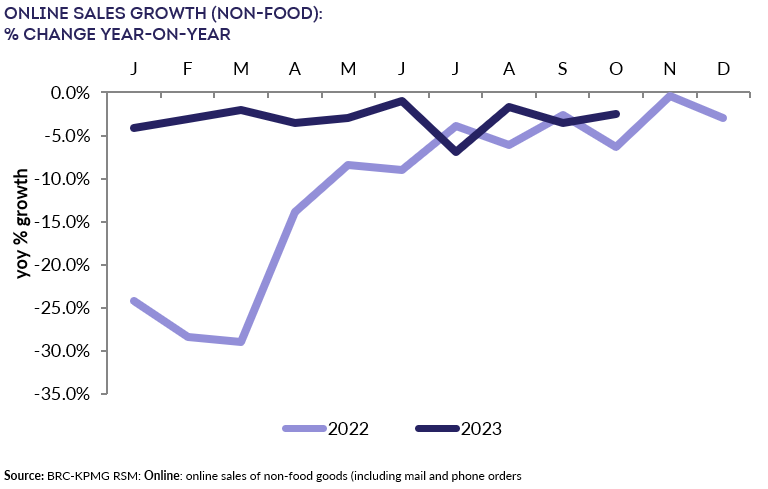
Online Non-Food sales decreased by 2.5%
in October, against a decline of 6.3% in October 2022. This was
shallower than the 3-month decline of 2.7% and deeper than the
12-month decline of 2.9%.
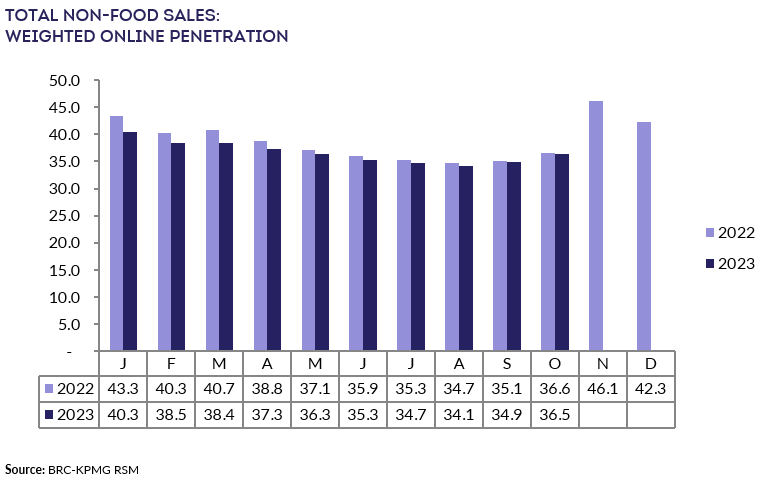
- The proportion of Non-Food items bought online (penetration
rate) decreased to 36.5% in October from 36.6% in October 2022.
Helen Dickinson OBE, Chief Executive
of the British Retail Consortium, said:
“Retail sales growth slowed as high mortgage and rental costs
further shook consumer confidence. Many households are also
delaying their Christmas spending in the hopes they can grab a
bargain in the upcoming Black Friday sales. The cost-of-living
squeeze meant more was spent on lower-price indulgences, such as
beauty products – the so-called ‘Lipstick Effect’. Meanwhile, the
arrival of some colder weather helped to boost fashion sales,
particularly for outdoor wear.
“Retailers continue to invest in lowering prices and streamlining
their operations, part of their commitment to delivering an
affordable Christmas for their customers. But this is put at risk
by the £470m-per-year rise in business rates facing retailers
next year. The Chancellor must freeze rates in the upcoming
Autumn Statement, to prevent extra cost pressure, pushing up
prices for struggling consumers.”
, UK Head of Retail, KPMG,
said:
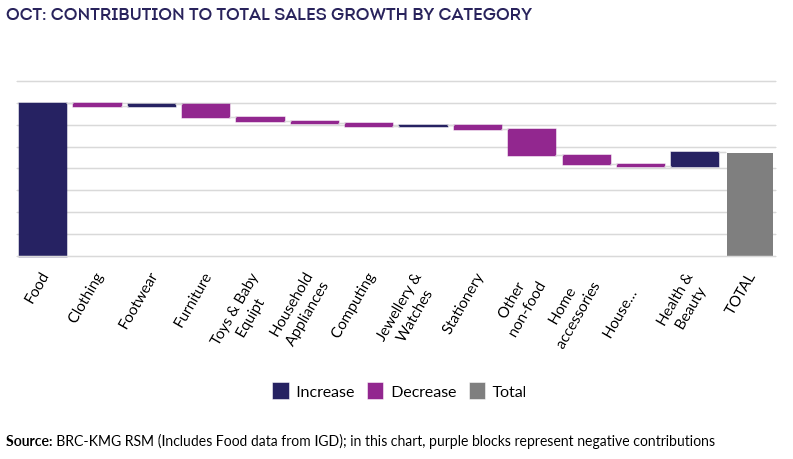
“Retail sales remained weak in October with growth of just 2.5%.
Food and drink and health and beauty categories continued to
drive sales, while a mild October saw consumers put off shopping
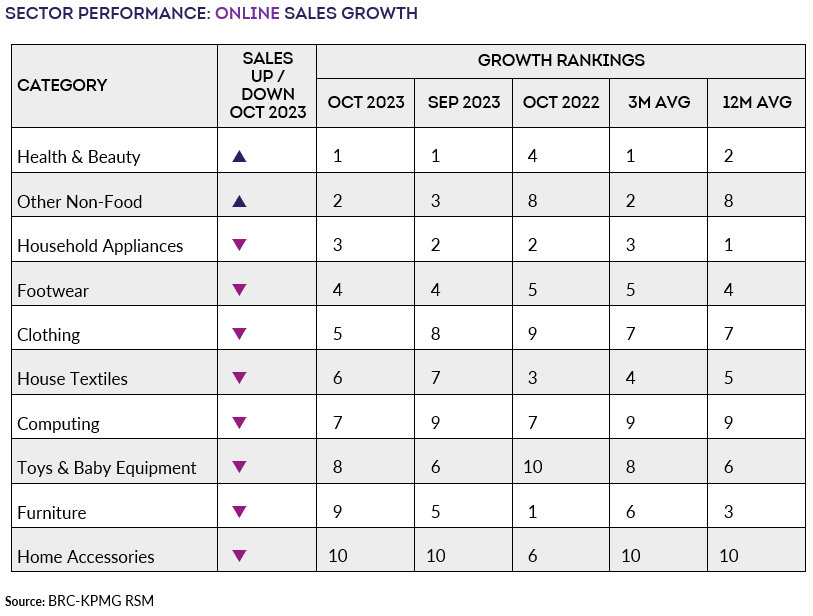
trips to replenish winter wardrobes. Online sales continued
to struggle, with negative sales growth recorded in every
category other than health and Other Non-Food. This could herald
the most competitive Black Friday period that we’ve seen in a
while.
“Whilst consumers are now operating in a lower inflationary
environment compared to October last year where inflation peaked
at over 11%, there is no doubt that the last 12 months have taken
a toll on confidence and their ability to spend. Coupled with a
higher interest rate environment, dwindling covid savings and the
heating coming back on, beleaguered consumers are thinking very
carefully about how they spend their money. As a result,
the strong demand that has kept some retailers afloat over the
last 18 months is now falling away.
“Although the retail sector has done some sterling work around
controlling their own cost environment, the health of the
industry is at the mercy of macro demand. Retailers are facing a
challenging Christmas, competing for a shrinking share of wallet,
driven by promotions that will no doubt cut into already
stretched margins. With spending levels expected to be much
more muted this year, the run up to Christmas could be the most
challenging we’ve seen since pre-pandemic days.”
Food & Drink sector performance | Sarah Bradbury,
CEO, IGD, said:
“October’s food and drink sales enjoyed a slight increase in
volume and value sales compared to last year, but value sales
were slightly down on September’s performance. As the country
enjoyed warm weather at the start of the month the market
benefitted with a slight increase in footfall. Further good news
came as inflation continued to fall against the steep increases
seen a year ago, with shoppers benefitting from reduced prices,
particularly from discounts offered by retailer’s loyalty
schemes.
“Shopper confidence remained the same in October as September and
continues to be at its highest level since December 2021. As
inflation fell again, more shoppers expect food prices to fall in
the year ahead – up to 12%, compared with 8% last month and 3% in
October ‘22. However, some 67% expect prices to rise in the year
ahead and IGD’s food price inflation forecast is for prices to
rise, albeit at a slower rate, indicating there are still
challenges ahead for the industry.”