Period Covered: 01 – 07 June
2022
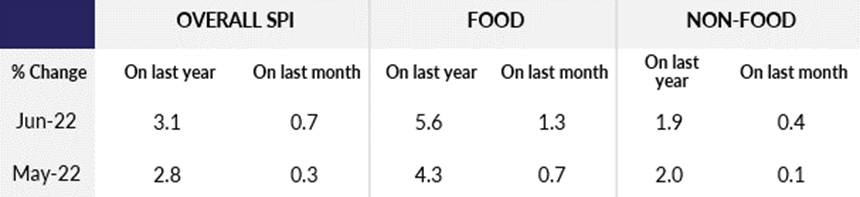
- Shop Price annual inflation accelerated to 3.1% in June, up
from 2.8% in May. This is above the 12- and 6-month average price
increases of 1.0% and 2.3%, respectively. This marks the highest
rate of inflation since September 2008.
- Food inflation strongly accelerated to 5.6% in June, up from
4.3% in May. This is above the 12- and 6-month average price
growth rates of 2.2% and 3.7%, respectively. This is the highest
inflation rate since June 2011.
- Non-Food inflation decelerated to 1.9% in June, settling down
from 2.0% in May. This is above the 12- and 6-month average price
increases of 0.4% and 1.6%, respectively. Inflation remains close
to the series’ high.
- Fresh Food inflation strongly accelerated in June to 6.2%, up
from 4.5% in May. This is above the 12- and 6-month average price
growth rates of 2.2% and 4.0%, respectively. This is the highest
inflation rate since May 2009.
- Ambient Food inflation accelerated to 4.8% in June, up from
4.0% in May. This is above the 12- and 6-month average price
increases of 2.1% and 3.3%, respectively. This is the highest
rate of increase since May 2012.
Helen Dickinson OBE, Chief Executive of the British
Retail Consortium, said:
“Last month households and businesses were hit by the highest
rate of inflation since the 1980s as near-record commodity prices
in energy, transport and food filtered through the supply chain.
Food prices rose sharply, particularly for fresh foods such as
cheese which has been affected by the spiralling costs of
fertiliser and animal feed.
“As households face the biggest real terms cut in income since
the at least 1970s and businesses grapple with upstream supply
chain costs, retailers remain focused on protecting their
customers. Fierce competition means that retailers will continue
to absorb as much of these costs pressures as possible and look
for efficiencies in their businesses. Supermarkets are also
expanding their value ranges to offer a wider choice for
customers trading down and providing discounts to vulnerable
groups. Retailers are working to find more ways to protect their
customers from the worst effects of inflation, but if costs
continue to spiral, Government may need to find ways to help
retail businesses support their customers."
Mike Watkins, Head of Retailer and Business Insight,
NielsenIQ, said:
“Whilst the fast-moving consumer
goods industry is more insulated from any downturn in consumer
expenditure, food retailing is not immune. As inflation
accelerates due to rising energy, travel and now food costs,
shoppers are now more likely to cut down on out of home
consumption, shop to a fixed budget, switch to cheaper private
label and seek out retailers where prices are the lowest.”
