Period Covered: 01 – 07 April
2022
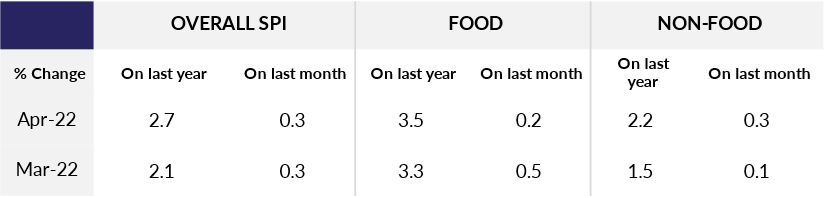
- Shop Price annual inflation accelerated to 2.7% in April, up
from 2.1% in March. This is above the 12- and 6-month average
price increases of 0.4% and 1.5%, respectively. This marks the
highest rate of inflation since September 2011.
- Food inflation accelerated to 3.5% in April, up from 3.3% in
March. This is above the 12- and 6-month average price growth
rates of 1.3% and 2.6%, respectively. This is the highest
inflation rate since March 2013.
- Non-Food inflation accelerated to 2.2% in April, up from 1.5%
in March. This is above the 12- and 6-month average price
decrease of 0.1% and increase of 0.9%, respectively. This marks
the highest rate of inflation since the data series began in
2006.
- Fresh Food inflation decelerated in April to 3.4%, down from
3.5% in March. This is above the 12- and 6-month average price
growth rates of 1.2% and 2.9%, respectively. This is the second
highest inflation rate since March 2013.
- Ambient Food inflation accelerated to 3.5% in April, up from
3.0% in March. This is above the 12- and 6-month average price
increases of 1.4% and 2.3%, respectively. This is the highest
rate of increase since January 2013.
Helen Dickinson OBE, Chief Executive of the British
Retail Consortium, said:
“The impact of rising energy prices and the conflict in Ukraine
continued to feed through into April’s retail prices. Non-food
products, particularly furniture, electricals and books, have
seen the highest rate of inflation since records began. This has
been exacerbated by disruption at the world’s largest seaport,
following Shanghai’s recent lockdown. Food prices continued to
rise, though fresh food inflation slowed as fierce competition
between supermarkets resisted price hikes on many everyday
essentials.”
“Global food prices have reached record highs, seeing a 13% rise
on last month alone, and even higher for cooking oils and
cereals. As these costs filter through the supply chain, they
will place further upward pressure on UK food prices in the
coming months. Retailers will continue to do all they can to keep
prices down and deliver value for their customers by limiting
price rises and expanding their value ranges, but this will put
pressure on them to find cost-savings elsewhere.Unfortunately,
customers should brace themselves for further price rises and a
bumpy road ahead.”
Mike Watkins, Head of Retailer and Business Insight,
NielsenIQ, said:
“Inflation shows no signs of abating
and the increase in non-food prices is an extra challenge for the
high street as fragile consumer confidence and rising living
costs are likely to negatively affect consumer spending. With
food retailing no longer immune to these pressures, supermarkets
are reacting by cutting the prices of some everyday grocery
products including private label to help limit shop price
inflation.”
-ENDS-
Notes:
- The BRC-NielsenIQ Shop Price Index, which
includes a basket of 250 essential food items (and 250 basic
non-food items) showed essential food prices
rising 3.3% in March 2022. This suggests food inflation is lower
for essential goods.
- Records began in 2006
-
https://www.fao.org/worldfoodsituation/foodpricesindex/en/
