
Guidance: Land affected by contamination
|
Provides guiding principles on how planning can deal with land
affected by contamination. Published 12 June 2014 Last
updated 22 July 2019 — see all updates From: Ministry of
Housing, Communities & Local Government...Request free trial
Provides guiding principles on how planning can deal with land affected by contamination.
Published 12 June 2014
Last updated 22 July 2019 — see all updates This guide has been updated see previous version Where plans are being prepared under the transitional arrangements set out in Annex 1 to the revised National Planning Policy Framework, the policies in the previous version of the framework published in 2012 will continue to apply, as will any previous guidance which has been superseded since the new framework was published in July 2018. If you’d like an email alert when changes are made to planning guidance please subscribe. Land affected by contaminationWhy should local planning authorities be concerned about land contamination?Failing to deal adequately with contamination can cause harm to human health, property and the wider environment. It can also limit or preclude new development; and undermine compliance with the Water Environment Regulations 2017. See related policy: Paragraph: 001 Reference ID: 33-001-20190722 Revision date: 22 07 2019 What is the role of planning when dealing with land which may be contaminated?To ensure a site is suitable for its new use and to prevent unacceptable risk from pollution, the implications of contamination for development should be considered through the planning process to the extent that it is not addressed by other regimes. The latter include:
Paragraph: 002 Reference ID: 33-002-20190722 Revision date: 22 07 2019 When is contamination likely to be present?Contamination is more likely to arise in former industrial areas however, it may also be present in other locations including in the countryside (eg by inappropriate spreading of materials such as sludges, or contamination being moved from its original source). In addition, some areas may be affected by the natural or background occurrence of potentially hazardous substances, such as radon, ground gases or elevated concentrations of metallic elements. Paragraph: 003 Reference ID: 33-003-20190722 Revision date: 22 07 2019 Are concerns about land contamination relevant to neighbourhood planning?Concerns about land contamination could be relevant to neighbourhood planning and it is important to consider the possibility of land being affected by contamination when drawing up a Neighbourhood Plan or considering a Neighbourhood Development Order. The local planning and environmental health departments should be able to advise on whether land contamination could be a concern. Paragraph: 004 Reference ID: 33-004-20190722 Revision date: 22 07 2019 How do you determine whether land could be contaminated?Only a specific investigation can establish whether contamination is present, but there are various sources of information that can be used to help establish its likelihood, including:
Information on the most common industrial activities and the risk of contamination is in Volume 2, Annex 3 of Guidance for the safe development of housing on land affected by contamination, published by the Environment Agency, National House Building Council and Chartered Institute of Environmental Health. More information is also available from industry profiles hosted by Contaminated Land: Applications In Real Environments (CL:AIRE). For applicants for planning permission, early engagement with the local planning and environmental health departments, particularly if the land is determined as contaminated land under The contaminated land regime under Part 2A of the Environmental Protection Act 1990, will clarify what assessment is needed to support their proposal and issues that need to be considered in its design of a development. For example how land affected by contamination can be made compatible with sustainable drainage. The Environment Agency will also have an interest in the case of ‘special sites’ designated under Part 2A of the Environmental Protection Act 1990 and all sites where there is a risk of pollution to controlled waters. Remediation will need to meet their requirements. Applicants should also check whether an environmental permit is required before development can start. Paragraph: 005 Reference ID: 33-005-20190722 Revision date: 22 07 2019 What is the role of plans in considering contamination?The extent to which plans will need to consider contamination will vary, but it can be helpful to:
Paragraph: 006 Reference ID: 33-006-20190722 Revision date: 22 07 2019 What is a contamination risk assessment and what can it contain?If there is a reason to believe contamination could be an issue, applicants should provide proportionate but sufficient site investigation information (a risk assessment) prepared by a competent person to determine the existence or otherwise of contamination, its nature and extent, the risks it may pose and to whom/what (the ‘receptors’) so that these risks can be assessed and satisfactorily reduced to an acceptable level. The National Quality Mark Scheme (NQMS) accredits competent persons with regard to assessing and reporting land contamination issues. The Department for Environment, Food and Rural Affairs has published a policy companion document considering the use of ‘Category 4 Screening Levels’ in providing a simple test for deciding when land is suitable for use and definitely not contaminated land. A risk assessment of land affected by contamination should inform an Environmental Impact Assessment if one is required. The risk assessment should also identify the potential sources, pathways and receptors (‘pollutant/ contaminant linkages’) and evaluate the risks. This information will enable the local planning authority to determine whether more detailed investigation is required, or whether any proposed remediation is satisfactory. At this stage, an applicant may be required to provide at least the report of a desk study and site walk-over. This may be sufficient to develop a conceptual model of the source of contamination, the pathways by which it might reach vulnerable receptors and options to show how the identified pollutant/ contaminant linkages can be broken. Unless this initial assessment clearly demonstrates that the risk from contamination can be satisfactorily reduced to an acceptable level, further site investigations and risk assessment will be needed before the application can be determined. Further guidance can be found on land contamination. Note that remediation or site investigation activities themselves, including field trials, may require planning permission if not carried out as part of a development, and in some cases may also need environmental permits. Paragraph: 007 Reference ID: 33-007-20190722 Revision date: 22 07 2019 Does an outline application require less information?The information sought should be proportionate to the decision at the outline stage, but before granting outline planning permission a local planning authority will, among other matters, need to be satisfied that:
Paragraph: 008 Reference ID: 33-008-20190722 Revision date: 22 07 2019 Should planning permission be refused if there are concerns about land contamination?Responsibility for securing a safe development rests with the developer and/or landowner. However, local planning authorities should be satisfied that a proposed development will be appropriate for its location and not pose an unacceptable risk. Local planning authorities should work with applicants to find acceptable ways forward if there are concerns about land contamination. For example, establishing or retaining areas of green infrastructure may serve to limit harmful disturbance of the ground. To help secure necessary mitigation, planning permission can be granted subject to conditions and/or planning obligations, where the relevant tests are met. Paragraph: 009 Reference ID: 33-009-20190722 Revision date: 22 07 2019 Using planning conditionsThe stages and the factors to consider in framing appropriate planning conditions can include:
Model land contamination conditions can be found in appendix A of circular 95/11. Paragraph: 010 Reference ID: 33-010-20190722 Revision date: 22 07 2019 Using planning obligationsPlanning obligations could be used in a number of situations, for example:
Paragraph: 011 Reference ID: 33-011-20190722 Revision date: 22 07 2019 Unacceptable riskThe Department for Environment, Food and Rural Affairs has published statutory guidance to help identify and deal with land which poses unacceptable levels of risk under the Part 2A of the Environmental Protection Act 1990 regime for remediating statutorily defined contaminated land. Local planning authorities will want to have regard to this guidance alongside other considerations including the Water Environment Regulations 2017 and other matters that could affect the amenity of a site and its future occupants. For example, there could be contaminants present at levels that could cause nausea, headaches, odour/nuisance to people or harm to non-protected species of plants and animals. After remediation, as a minimum, land should not be capable of being determined as contaminated land under Part 2A. More stringent standards of remediation than those under Part 2A apply to the management of the risks posed by man-made radioactive substances as a result of redevelopment for a new use. Public Health England has published technical guidance on recovery from chemical incidents and the Department for Business, Energy and Industrial Strategy has published statutory guidance on land affected by radioactive contamination. Public Health England has also published guidance on areas affected by radon and the control measures available for new development. Paragraph: 012 Reference ID: 33-012-20190722 Revision date: 22 07 2019 How is contamination dealt with in the decision-making process?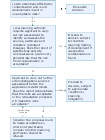
FlowchartPDF, 32.7KB, 1 page This file may not be suitable for users of assistive technology. Request an accessible format.Paragraph: 013 Reference ID: 33-013-20190722 |