“I could go to work again”: prescriptions for NICE-recommended endometriosis and fibroid tablets soar, more than tripling in a year
|
Prescribing of NICE-recommended tablets for endometriosis and
fibroids has risen sharply across England, giving thousands more
women another option to manage painful and debilitating symptoms
Lucy Ford has lived with endometriosis since her first period, aged
13. Rather than face further surgery after her symptoms returned in
2024, she started taking relugolix combination therapy (relugolix
CT) in January this year. "It's been life-changing for me," she
says. "I'm...Request free trial
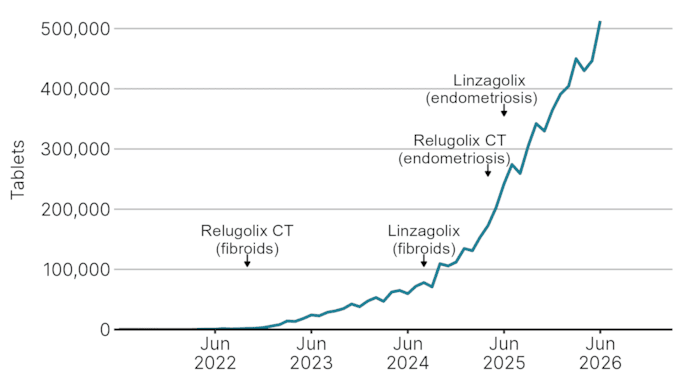
Lucy Ford has lived with endometriosis since her first period, aged 13. Rather than face further surgery after her symptoms returned in 2024, she started taking relugolix combination therapy (relugolix CT) in January this year. "It's been life-changing for me," she says. "I'm almost pain-free now. I might have the occasional flare-up, but I'm not dealing with constant pain, bloating, or multiple bowel movements a day anymore." Clare Gallagher, 46, started the tablets in October 2025 while waiting for a hysterectomy for her endometriosis. The pain was so severe I couldn't do anything, she says. After an initial flare-up, the medication helped her manage while waiting for the operation. I could go to work, whereas the pain I used to get would put me in bed. Ruth Ajayi, 45, a Black woman who has had fibroid symptoms since she was a teenager, was repeatedly told her agonising pain and heavy bleeding were normal. "I was always flooding and passing out large clots, with incredible pain," she says. Offered a hysterectomy, she chose to try one of the new tablets instead and has avoided surgery so far. She has since temporarily stopped using it after experiencing pain and hot flushes and is awaiting a review with her gynaecologist, but says she does not regret taking it. "I wish more women knew about this treatment." Ruth, Lucy and Clare are among a growing number who have taken relugolix CT or linzagolix. More than 12,000 people in England were prescribed these medicines by GPs between April 2025 and March 2026, almost three times the 4,100 prescribed them the previous year. The number treated is higher because treatment usually starts in hospital, while primary care figures mainly capture repeat prescriptions. Total NHS use of these medicines also more than tripled over the same period, from 1.2 million to 3.7 million tablets. Figure 1: Number of relugolix CT and linzagolix tablets provided to patients in England, by month, with NICE recommendation dates marked
Note: Figures include primary and secondary care. Source: NICE analysis of NHSBSA and RXinfo Define data Years of pain, and a fight to be heard Both conditions can cause severe pain, heavy bleeding and exhaustion. Endometriosis, in which tissue similar to the womb lining grows elsewhere in the body, affects around 1 in 10 women of reproductive age and takes an average of nine years to diagnose in the UK. Fibroids are non-cancerous growths within or on the outside of the womb. They are more common among Black women, who can develop more severe symptoms at a younger age. The government's Renewed Women's Health Strategy says too many women have felt ignored or had their pain dismissed. Ruth, Lucy and Clare say this reflects their experiences. "Doctors told me there was nothing wrong with me and tried to deny I'd ever been diagnosed with endometriosis. A doctor left me sobbing," says Lucy. "I felt like no one was going to listen to me or believe me." "I saw doctors many times, but no one investigated further. By the time I reached a specialist centre, my endometriosis was so advanced that I had to have my womb, ovaries and appendix removed," says Clare. Ruth believes the dismissal she faced may have been shaped by racism, as well as a wider pattern of medical misogyny affecting women more broadly. "Every time I go to A&E, I have to beg for pain relief. I don't know if it's because I'm a Black woman and there's racism embedded in the system, but this is also the story of other women, regardless of skin colour." "For many years, the health system has normalised pain and suffering in women, but that doesn't mean that we need to keep enduring it," she says. "Start listening to us. Start working with us. Start investigating. Give us adequate pain relief, and don't dismiss us." Why more people are taking the tablets Relugolix CT and linzagolix are oral GnRH antagonists, tablets that reduce the hormones linked to endometriosis and fibroids. Unlike older hormone injections, clinicians say the tablets can be taken long term and may start working more quickly. NICE recommends the tablets for adults with moderate to severe fibroid symptoms. Linzagolix is recommended for longer-term treatment, with the dose depending on the patient. For endometriosis, they are recommended for those who have already tried other medical or surgical treatments. Neither tablet is a first treatment for everyone. "The NICE recommendation has given clinicians confidence in using these treatments," says Dr Aamena Salar, a GP with a specialist interest in women's health at Modality Community Gynaecology Clinic. "They give us flexibility to address these conditions at an earlier stage, so we're not delaying treatment or dealing with more complicated surgery. People also find them convenient because they're tablets rather than injections, so they don't have to come to the clinic and can stop treatment if side effects occur." "With such long waits for both diagnosis and surgery, the NICE recommendation of these tablets addresses a need for long-term, non-invasive treatment," says Dr Nilofer Husain, consultant gynaecologist at University Hospitals Birmingham NHS Foundation Trust. Safety and monitoring "We still need more information about their long-term safety," says Dr Husain. "That's why it's essential to carefully select which patients are offered treatment, and regular check-ups, including bone health scans, are also important to monitor how well patients are tolerating it." Marie Anne Ledingham, consultant clinical adviser for women's and reproductive health at NICE, said: "No woman should have to live for years with severe pain or heavy bleeding before being offered treatments that could help. That is why it is positive to see more women taking these tablets. They offer another way to manage often incredibly debilitating symptoms and, for some women, may help avoid or delay more invasive treatment. "We know women have too often had their symptoms dismissed or faced long waits to be heard, which is why tackling these inequalities is part of our wider work on women's health. "These tablets won't be suitable or effective for everyone, but we hope greater awareness will help people have informed discussions with their doctors." What else is being done The Renewed Women's Health Strategy includes plans to cut gynaecology waiting lists, speed up diagnosis and improve pain relief during gynaecological procedures. NICE has also conditionally recommended Endotest, a saliva test that could help GPs diagnose endometriosis more quickly, and provides guidance on heavy menstrual bleeding and endometriosis. But the message from women such as Ruth, Lucy and Clare is simple: heavy bleeding, severe pain and exhaustion should not be dismissed as just part of life. NICE says anyone whose periods are disrupting their day-to-day life should seek help and be offered a proper conversation about the options that may be right for them. Women's health is a priority for NICE. Our guidance is helping turn the governmen's ambitions into better care for women. Notes to editors Ruth Ajayi is a lay member of the NICE Prioritisation Board, the Diagnostics Advisory Committee and the People and Communities Network (PaCN) Leaders Group. She is speaking here in a personal capacity about her own experience. |