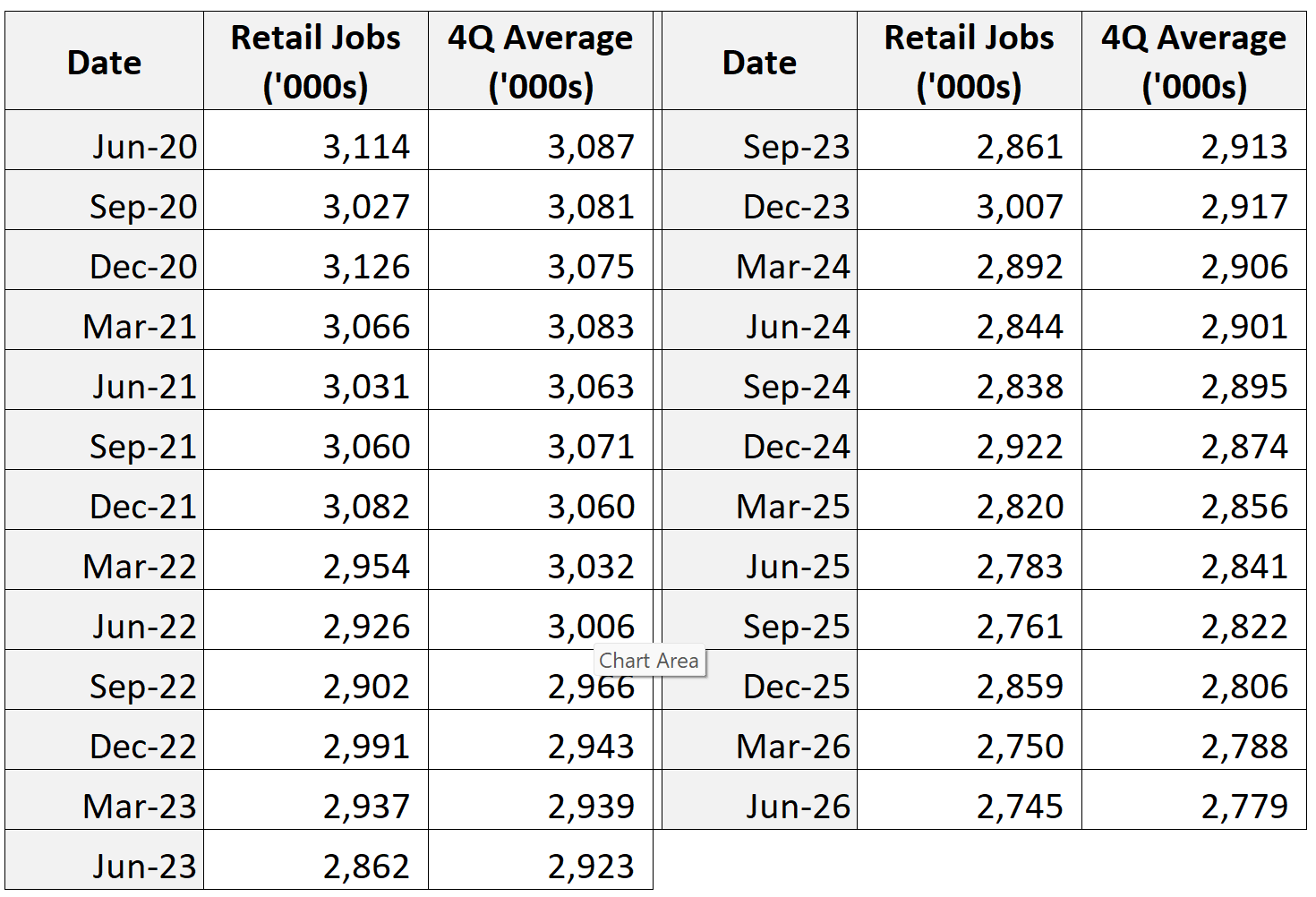
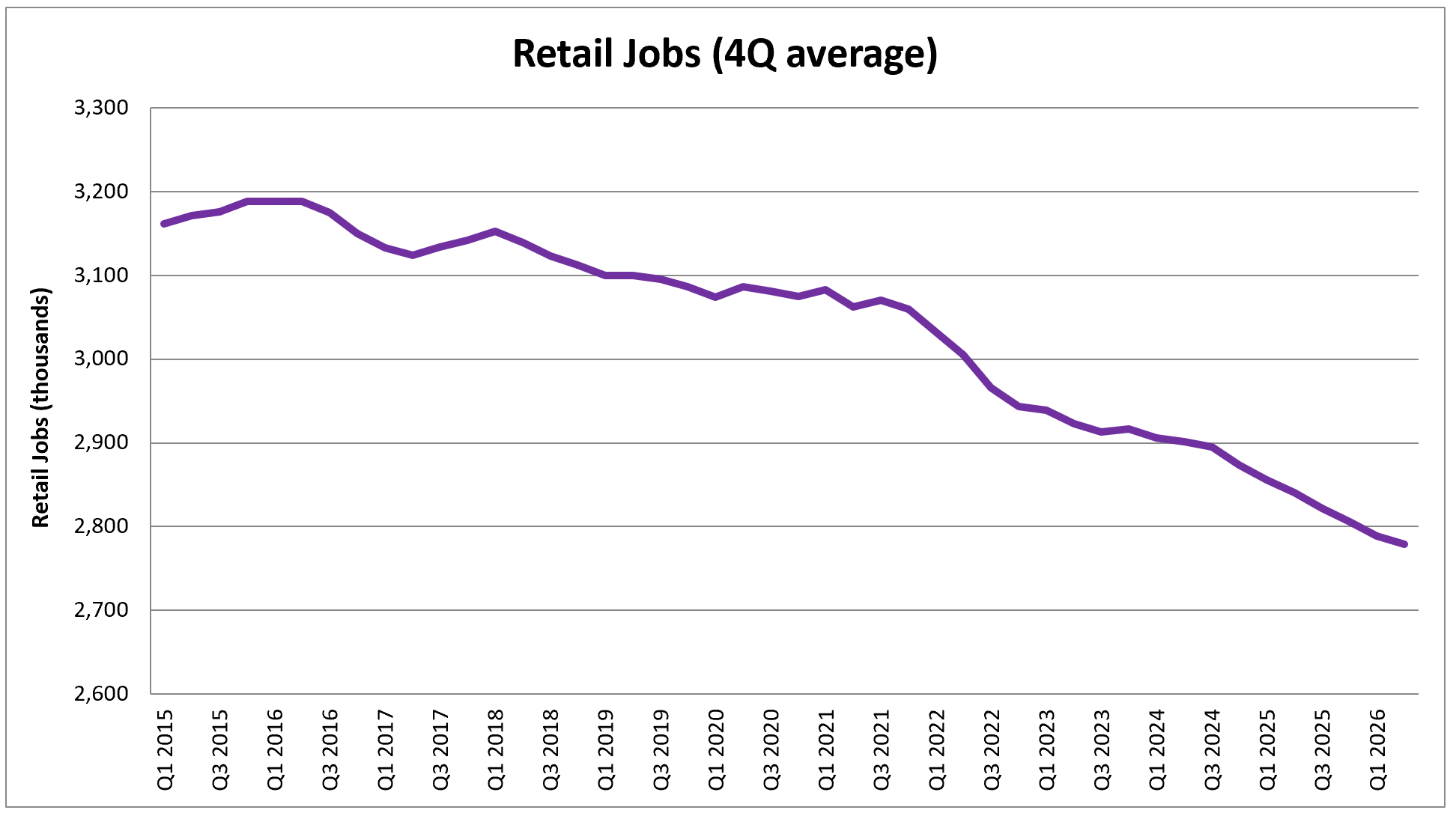
According to the latest ONS figures, there were 2.75 million
retail jobs in June 2026. Using the four-quarter average which
smooths out the seasonal variations in hiring, there was
2.78 million jobs in retail in the year-to-Q2
2026, 62,000 fewer than a year earlier, 122,000
fewer than two years ago, and 410,000 fewer than a decade ago.
This four-quarter average is the lowest on record.
Using the four-quarter average, there were 1.29 million full-time
and 1.50 million part-time jobs. The number of part-time retail
jobs is the lowest on record. Retail remains the largest private
sector employer in the UK, bigger than both hospitality, at 2.62
million, and manufacturing, at 2.35 million.
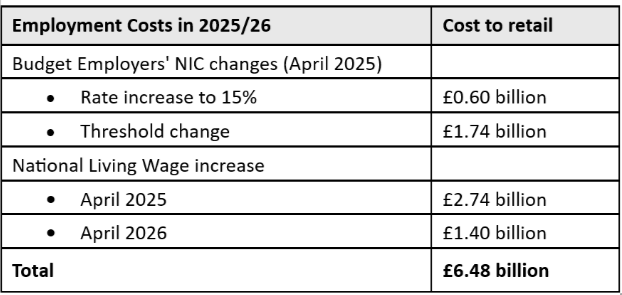
The 2024 Budget changes to the National Insurance contributions
(NICs) threshold and rate, which came into effect in April 2025,
cost retailers £2.3 billion. Combined with two above-inflation
annual rises in the National Living Wage, retailers' employment
costs have spiralled by £6.5 billion in just two years.
Commenting on these figures, Helen Dickinson, Chief
Executive at the British Retail Consortium, said:
Entry-level retail jobs are vanishing at the very moment they are
needed most. With one in seven young people now not in education,
employment or training, the loss of 122,000 jobs in the last two
years means tens of thousands fewer opportunities for young
people to get their first step on the career ladder, build skills
and earn a living.
These job losses have not happened by accident. Retailers are
being hit by a tidal wave of employment costs. In just two years,
increases to National Insurance Contributions and the National
Living Wage have added £6.5 billion in costs, while further
employment reforms risk making it even harder to create and
sustain jobs.
Retailers are going above and beyond to help young people and
tackle the UK NEETs crisis. Through our new initiative Opening
Shift', retailers have already pledged over 11,000 work
experience places, with many more to come. The industry aims to
create 100,000 job opportunities for young people, but government
must match that ambition with policies that support job creation,
not make it harder. Raising the NICs threshold to £6,000, which
would help retailers invest, hire and give thousands more young
people that vital first step on the jobs ladder.
-ENDS-
More information on Opening Shift here.
ONS jobs figures are reached by adding Retail trade, except
of motor vehicles and motorcycles of:
-
Jobs03: Employee jobs by
industry
-
Jobs04: Self-employment by
industry
Jobs03 data goes back to 1978, while Jobs04 data only goes back
to 1996. This means Total figures (and records) only go from
1996.
Any discrepancies with the figures the BRC published last quarter
are due to revisions of previous data made by the ONS.
Employment Cost increases