Period Covered: 01 07 August
2026
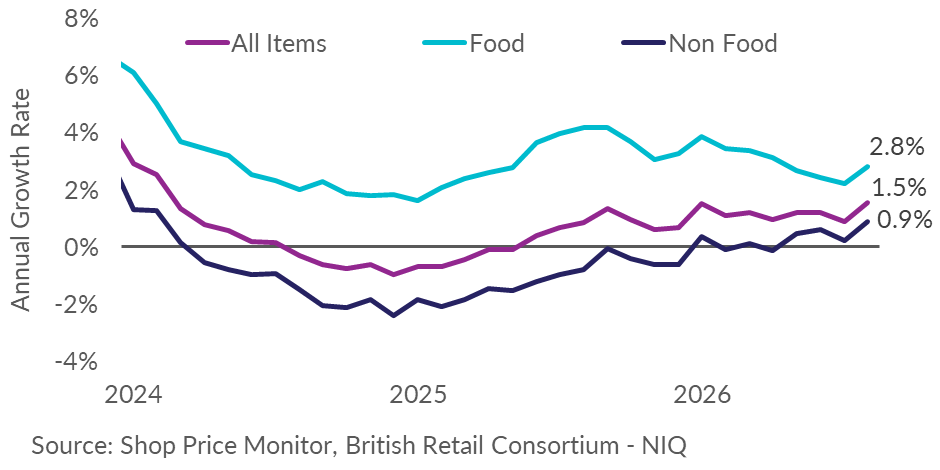
- Shop price inflation increased to 1.5% year on year in
August, against growth of 0.9% in July. This is above the 3-month
average of 1.2%.
- Non-Food inflation increased to 0.9% year on year in August,
against growth of 0.2% in July. This is above the 3-month average
of 0.6%.
- Food inflation increased to 2.8% year on year in August,
against growth of 2.2% in July. This is above the 3-month average
of 2.5%.
- Fresh Food inflation decreased to 3.0% year on year in
August, against growth of 3.1% in July. This is in line with the
3-month average of 3.0%.
- Ambient Food inflation increased to 2.5% year on year in
August, against growth of 1.1% in July. This is above the 3-month
average of 1.8%.
|
|
OVERALL SPM
|
FOOD
|
NON-FOOD
|
|
% Change
|
On last year
|
On last month
|
On last year
|
On last month
|
On last year
|
On last month
|
|
Aug-26
|
1.5
|
0.8
|
2.8
|
1.0
|
0.9
|
0.7
|
|
Jul-26
|
0.9
|
-0.1
|
2.2
|
0.2
|
0.2
|
-0.3
|
Note: Month-on-month % change refers to changes in the
level of prices.
Helen Dickinson, Chief Executive of the BRC,
said:
Shop price inflation rose to its highest level in over two years,
albeit well below the headline Consumer Price Index. The impact
of higher energy, input and commodity costs is beginning to
filter through into prices, particularly for ambient foods which
are typically imported and processed. In non-food, electrical
prices rose amid the ongoing AI boom, which is forcing up the
price of memory chips and storage. Meanwhile, retailers kept
clothing prices low to offer value for families getting ready for
the new school year.
The months ahead look challenging for households, with rising
bills putting further pressure on budgets. Retailers are facing
persistently high operating costs, limiting their ability to
absorb further increases without impacting investment, jobs and
prices. If the Government is serious about supporting growth
while keeping the cost of living in check, it must address the
cost of doing business, including by tackling the growing burden
of business rates, packaging and employment taxes.
Mike Watkins, Head of Retailer and Business Insight, NIQ,
said:
While the increase in both food and non-food inflation is not
unexpected, particularly as some of the summer promotional
activity seen in recent months comes to an end, retailers
continue to keep prices low, helping consumers manage rising
household costs such as energy and fuel. However, pressures are
continuing to build across supply chains, and we can expect price
competition to intensify as we move into the autumn months.
