-
Consumers swap credit for debit cards due to higher
interest rates
-
Cash used for just under one fifth of
transactions
-
Fees paid to bank and card schemes over £1.4
billion
Today, The British Retail Consortium (BRC) has published its
annual BRC Payments Survey,
showing the changing way in which people made payments in 2024.
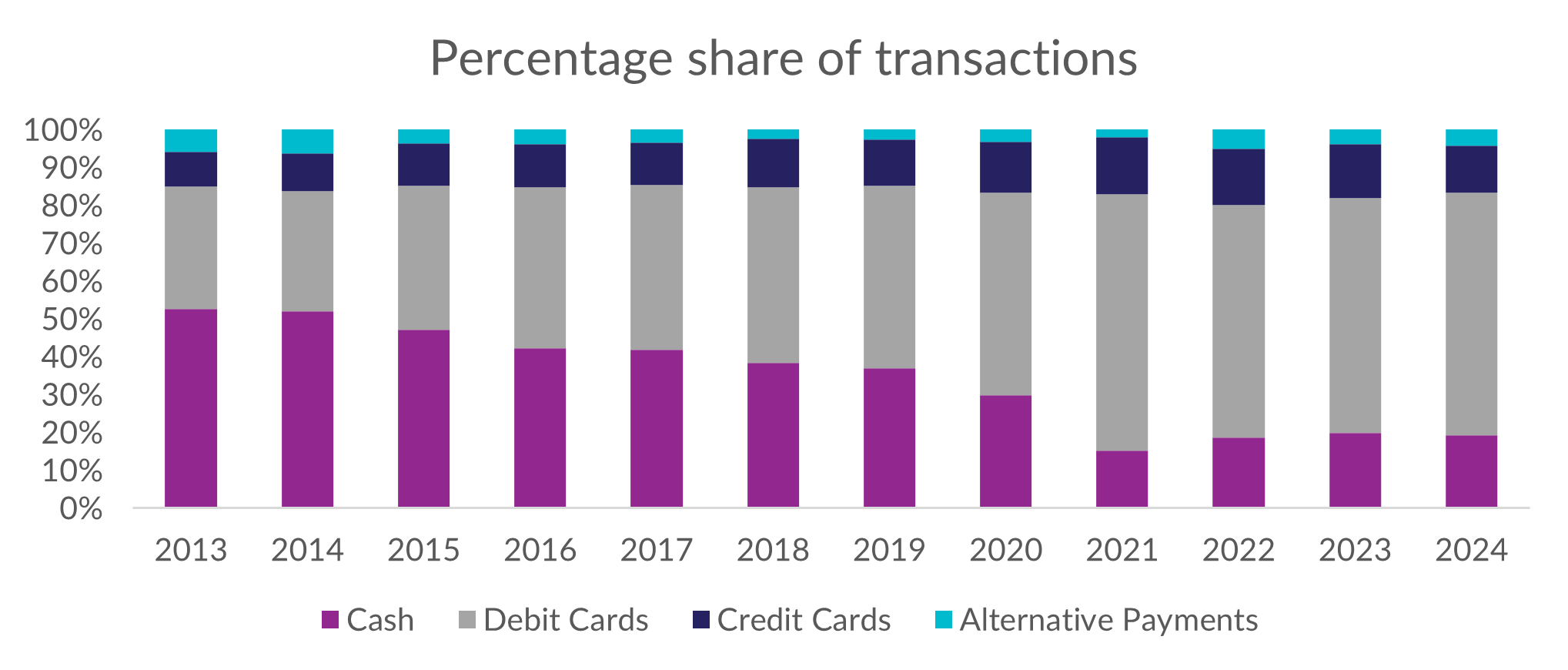
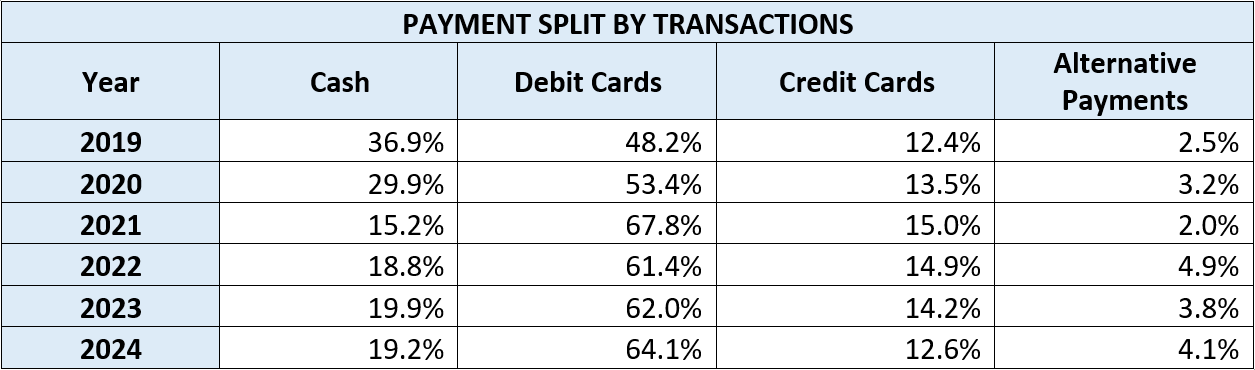
This year's survey reveals a significant decline in the use of
credit cards, from 14.2% of transactions to 12.6%. With higher
interest rates making credit cards a more expensive way to shop,
consumers turned to debit cards where usage increased from 62.0%
to 64.0% of transactions.
As the cost of living crisis eased, some customers returned to
old habits. The weekly shop showed signs of a comeback with
consumers making fewer but larger transactions. The total number
of transactions fell from 20.9 billion to 20.4 billion while the
average transaction value rose across all payment types.
While cash usage declined it still remains an important payment
method for many customers, accounting for almost a fifth (19.2%)
of all transactions, though the average transaction value was
significantly smaller than other payment methods. Despite their
declining popularity, for larger transactions, consumers
preferred using credit cards which offer additional protections
for shoppers.
More shoppers were exploring less traditional payment methods
than ever before, particularly for larger transactions. This
included the use of gift vouchers, PayPal and Buy Now Pay Later.
Retailers and the BRC have long called out the significant,
unjustified rise in the cost of processing card payments. Total
card fees fell slightly in 2024 compared with 2023. However, at
£1.48 billion, the fees paid by retailers have more than doubled
since 2019. In April, the Payments System Regulator proposed
increasing transparency on fees charged to merchants and
acquirers. This falls well short of what is needed. The BRC is
calling for:
-
Meaningful reform from the PSR on card fees: A
long term price cap to meaningfully lower scheme and processing
fees and bring lasting reform to the market.
-
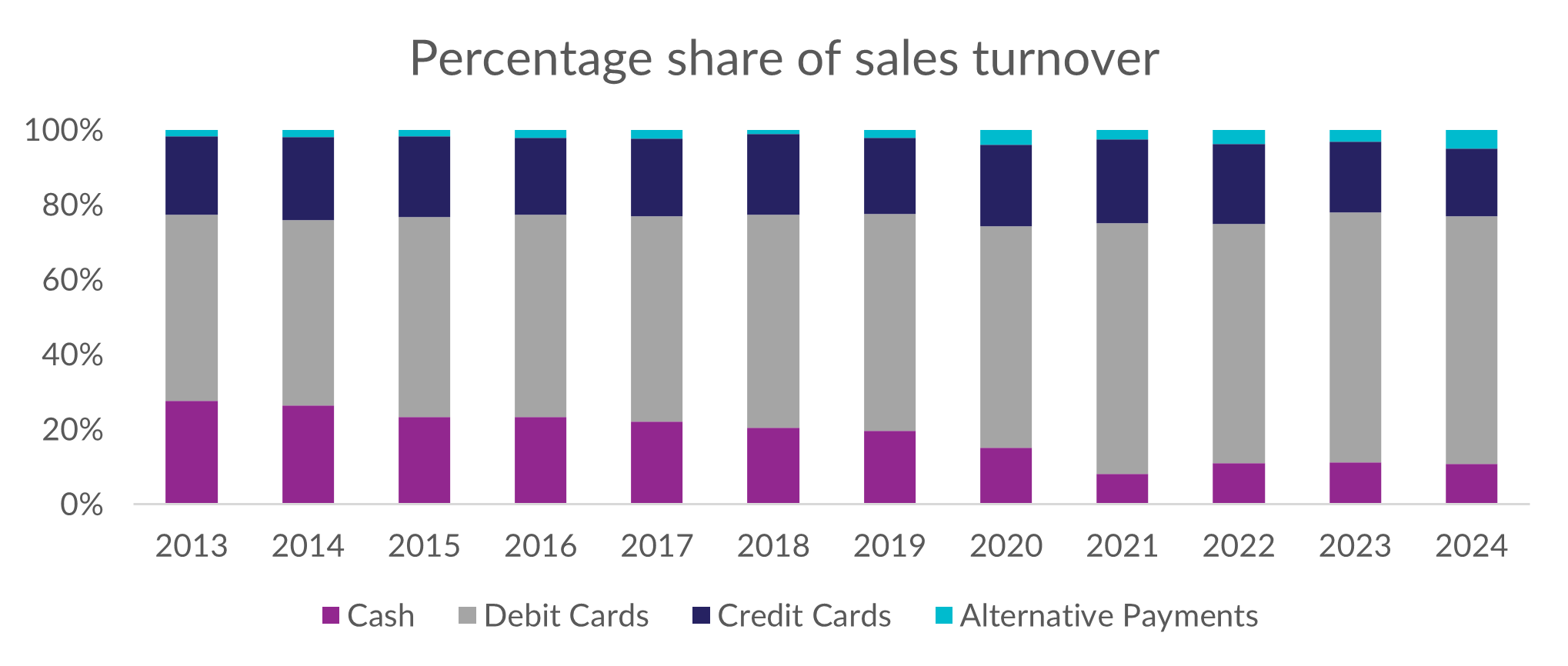
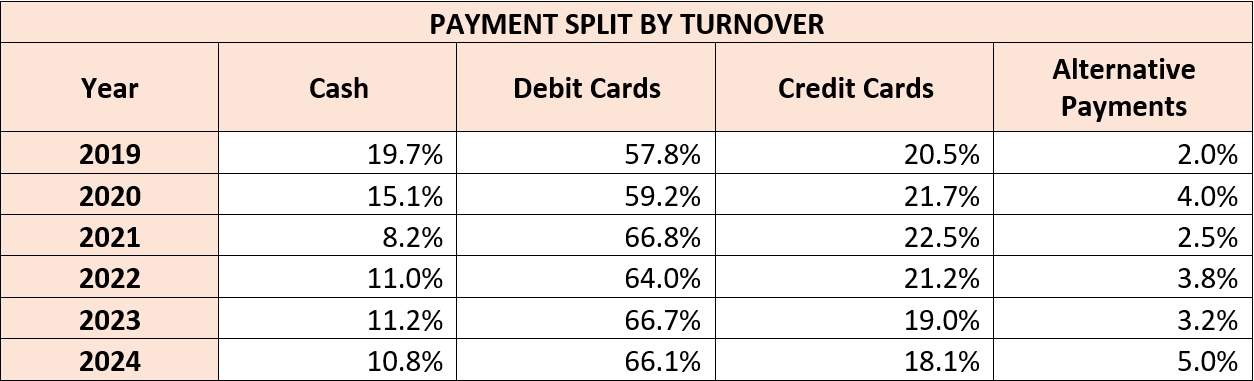
A Commercial Cards Market Review: Given the 8%
rise in commercial card fees (by turnover), we call on the PSR
to initiate a market review into Commercial Card interchange
fees to ensure the whole payment market is functioning
effectively.
-
Open banking: We want to see the growth of
Open Banking in the UK, so that it can be a viable alternative
to cards both online and at point of sale, at a fairer price to
retailers.
Chris Owen, Payments Policy Advisor at the British Retail
Consortium said:
“As interest rates peaked in 2024, the use of credit cards fell
as customers switched to lower interest forms of payment.
However, with cards still accounting for the vast majority of
transactions and card fees now more than double the level they
were six years ago, only a long-term cap on card fees would bring
much needed relief to retailers. Looking ahead, as the PSR
transitions into the Financial Conduct Authority next year, it is
vital that the FCA carries this work forward, delivering fairness
and transparency in a market long hampered by competition issues
and unjustified fee increases.”
-ENDS-
Notes:
- BRC Payments Survey can be found here: https://brc.org.uk/media/1sellpis/brc-payments-survey-2025.pdf
- Data for the BRC Payments Survey was gathered in 2025 and
covers the 2024 calendar year. Retailers participating in the
survey accounted for 34% of all UK retail annual sales turnover.
- We have adjusted and improved our methodology this year. We
have re-run all previous years' data so all figures used in this
year's survey account for the new methodology.
- Download the BRC Payments Survey 2025:
- Definitions:
- Card Schemes – Payment networks e.g. Visa, Mastercard and
American Express
- Scheme fees – fees paid by retailers to the card schemes
- Interchange fees – fees paid by retailers to the issuing
companies e.g. Barclaycard, Santander, Capital One. The rates
paid are set by the card schemes.
- Commercial cards – Cards used by businesses to make
purchases on behalf of a company.
